January 13, 2026
You're standing in the kitchen, coffee in one hand, phone in the other, trying to log breakfast without losing your mind. In 2026, you've got options, but which calorie tracking app actually helps you stay consistent instead of burning you out?
MyFitnessPal is the veteran with a massive database. LoseIt is the clean, motivating alternative.
But ChAIron is wholesome.
ChAIron Nutrition takes a completely different path: no obsessive counting, just simple photo snaps that build sustainable patterns. We tested all three apps daily for three months: blogging meals, tracking workouts, and dealing with the real friction points users face.
Here's what we found.
MyFitnessPal greets you with a lot of information. We found the interface crowded right from the start, especially overwhelming if you're new to logging. Recent updates made simple tasks require multiple steps. Adding a meal that used to take two taps now takes four or five.
We noticed navigation feels clunkier than it did even a year ago.
LoseIt won our initial usability test with a sleek, uncluttered design that felt welcoming and less intimidating.
But here's what we discovered within the first week: intrusive ads. On the free version, ads hijacked the screen just as we were trying to enter meal data, with no clear way to close them without force-quitting the app. This happened consistently, multiple times per day.
For an app you're supposed to use 3-5 times daily, that friction adds up fast.
ChAIron Nutrition kept it even simpler in our testing. We snapped a photo of each meal, added one or two quick tags (high protein, treat, post-workout), and moved on. No long searches, no overwhelming charts, no ads hijacking our screen, just a calm, focused experience that made daily logging feel natural.

Over 90 days, this was the only app we never dreaded opening.
MyFitnessPal has the biggest database, over 14 million foods. We don't argue with that. We could almost always find what we were eating.
But here's the problem we ran into constantly: because so much of it is user-submitted, the same item had wildly different calorie and macro values depending on who entered it.
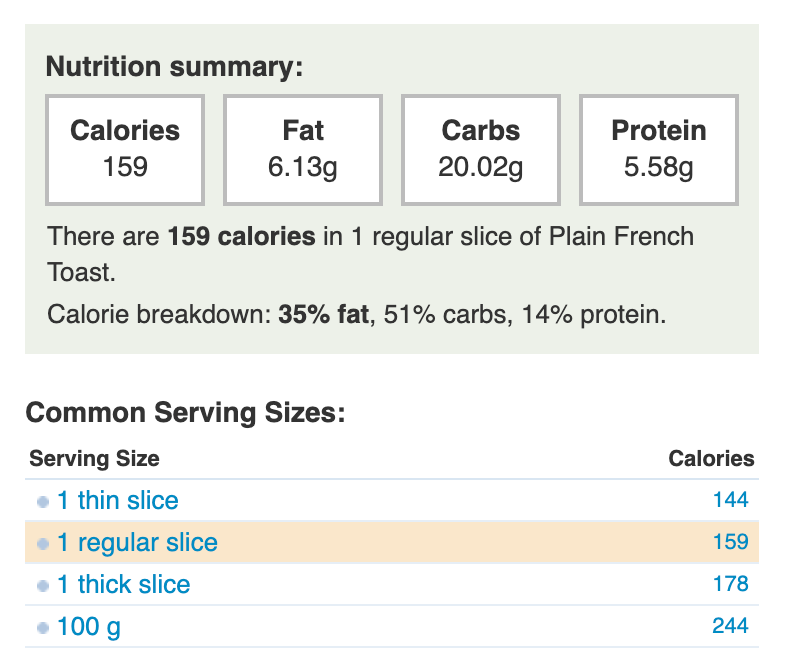
Test case: We scanned a single plain french toast (Jacquet) packet five times over two weeks. We got three different calorie counts: ranging from 100 to 140 calories for the identical product. On our last entry, it showed 176 cal for a single slice (irrespective of whether the slice is thin, regular or thick), whereas one check in the FatSecret, showed the following nutrition summary.
The barcode scanner frequently pulled up wrong information. We had to manually search by typing the product name anyway, then cross-reference the nutrition label to verify accuracy. This happened on roughly 30% of packaged foods we scanned.

Some entries showed absurd data, green salads with 20g of protein, chicken breast with 0 calories. We wasted time every meal double-checking whether the numbers made sense.
LoseIt kept a smaller, more curated database. We found it more reliable for common whole foods and big brands.
Our testing showed: Hardly any wildly inaccurate entries compared to MyFitnessPal's user-created chaos. But niche or local items sometimes weren't there, we couldn't find several regional grocery store brands. We also caught portion size errors. A bag of Trader Joe's beef jerky scanned as 90 calories when the label clearly stated 360 calories for the full bag. Close attention to serving sizes was still required.
ChAIron Nutrition doesn't use a traditional database at all. It learned our eating patterns from our photos and tags over time. No junk entries to sift through, no verifying whether "green salad - 20g of protein" makes any sense. After two weeks, it recognized our breakfast routine and started suggesting similar meals. We never had to question data accuracy because there were no database entries to verify.
MyFitnessPal gave us detailed macro breakdowns and let us customize targets to the gram, useful when we tested strict protein goals during a strength phase.
But the crowd-sourced data meant we constantly questioned whether the numbers were right. And we discovered a confusing problem: the app showed us having "calories left over" when we'd already hit all our macros, which scientifically shouldn't happen since macros add up to total calories.
Major change we noticed: The free version no longer includes the barcode scanner or macro adjustments. Features that were free when we first tested MyFitnessPal years ago are now locked behind the $80/year premium paywall.
This felt like a bait-and-switch. Core functionality removed to force upgrades.
LoseIt showed macros in a visual, color-coded way that was easier to digest during our testing. It's less granular but friendlier for quick daily checks without spreadsheet-level detail.
We paid for premium (~$40/year) to test custom macro tracking. It worked well for setting specific protein and fat targets.
But we ran into a frustrating performance issue: the app became unresponsive for at least 5 seconds whenever we tried to log a new meal, even on the latest iPhone. This lag happened consistently, every single meal entry, for the entire three months.
ChAIron Nutrition skipped the numbers entirely. It looked at our weekly patterns and told us if our eating was supporting our energy and recovery, without making us hit exact grams.
During a heavy training week, it noted we were undereating protein relative to our workout load. During a rest week, it adjusted guidance downward. This felt smarter than static daily targets that don't account for real life.
We tested both free and premium versions of all three apps.
MyFitnessPal's free version handled basic tracking, but ads and locked features became increasingly annoying. Premium costs $80-100/year (or $20-25/month).
What we found: This is expensive for what you get. Many features that used to be free: barcode scanning, macro customization, are now premium-only. We felt nickeled-and-dimed paying $80/year for a food diary when our gym membership costs less.
And when we tried to contact customer service with a billing question during testing, we hit a wall. No phone number. No email. Everything pushed to Apple support or their Zendesk support on site or automated help articles. We never reached an actual person.
LoseIt's free tier was more usable out of the box during our testing. Premium (~$40/year) unlocked recipes, challenges, and better exercise integration, better value than MyFitnessPal.
But we ran into a subscription management problem. When our test trial ended, we were charged the full $40 immediately with minimal warning. When we tried to cancel following the in-app instructions, there was no clear "cancel subscription" button where they said it would be.
We submitted a support email. Two days later, still no response. There's no live chat, no phone number. Eventually we had to cancel through our Apple ID settings directly.
ChAIron Nutrition's subscription (after a 7-day free trial) unlocked the full hub: adaptive guidance, menu scanning, and Energy Age tracking, with no ads or upsells from day one.
We got the core experience immediately, and our data stayed private on our device (we verified this, no cloud uploads unless we chose to back up).
We tested all three apps synced with Apple Watch and tracked workouts during our three-month period.
MyFitnessPal and LoseIt both adjusted calorie targets based on workouts. But we discovered a problem: calorie overestimation.
After a 45-minute strength session, MyFitnessPal added back 400-500 calories to our daily target. Our Apple Watch estimated 280 calories burned. The discrepancy was significant and consistent.
This "eat back your exercise calories" feature became confusing. If we followed the app's adjusted targets, we weren't losing weight as expected. When we ignored the exercise add-backs, progress matched our goals.
The apps encouraged eating more after workouts even when we weren't hungry, which sabotaged our deficit.
LoseIt had similar integration with fewer wild overestimates, but the same conceptual problem: static calorie math that doesn't account for hunger signals or weekly patterns.
ChAIron Nutrition pulled in steps, sleep, and activity from our Apple Watch, but it used that data differently.
Instead of just adding calories back, it refined our weekly Energy Age score and suggested smarter eating patterns. After a hard training day with poor sleep, it noted our recovery was lagging and suggested lighter eating or more focus on protein-rich meals.
It was context-aware, not just math-based. That felt more aligned with how our bodies actually responded to training.
ChAIron’s Energy Age is a unique weekly signal that shows how energized and recovered your body actually is, instead of obsessing over weight or body fat. It blends your weekly selfie, training load, sleep, hydration, and nutrition balance to tell you when your habits are working, when fatigue is building, and when it’s time to push or restore, making it a far more human, real-world metric than the scale.
.png)
Based on our testing experience:
ChAIron was the only app that consistently delivered on these points throughout our three-month test.
During our testing, we noticed something subtle but important: the constant verification, database checking, and number-hitting created a mental burden that compounded over weeks.
We found ourselves getting anxious about logging "imperfect" meals: restaurant dishes with unknown calorie counts, homemade recipes without exact measurements, social meals where we couldn't weigh portions.
With MyFitnessPal and LoseIt, these moments felt like failures. The apps wanted precision we couldn't always provide.
We read accounts from registered dietitians who've written about how calorie tracking apps can trigger disordered eating patterns, obsessing over numbers, restricting below healthy levels, experiencing guilt after "going over" arbitrary targets.
We didn't develop eating disorders during our test, but we understood how the psychology could spiral. The apps reward hitting numbers, not listening to your body.
ChAIron avoided this entirely by focusing on patterns and energy, not hitting exact targets. We logged indulgent meals without guilt because the app treated them as part of normal eating patterns, not failures.
This felt more sustainable for long-term use.

MyFitnessPal works if:
LoseIt works if:
ChAIron Nutrition worked best in our testing if:
We used all three apps daily for three months. MyFitnessPal and LoseIt can work, but both created friction around ads, removed features, subscription management, and non-existent customer service.
The database accuracy issues in MyFitnessPal cost us time every meal. The performance lag in LoseIt became genuinely annoying by week six. The subscription and support problems we encountered with both apps felt preventable.
ChAIron Nutrition was the only app we consistently wanted to open by month three. Pattern-based guidance felt smarter than static targets. Privacy through local processing mattered more than we expected. And the lack of verification fatigue made logging feel sustainable instead of exhausting.
We're still using ChAIron. We stopped using the other two after our testing period ended.
Try the free versions of MyFitnessPal and LoseIt if you want to see the problems for yourself. Or start with ChAIron's 7-day trial and see if ditching the numbers is exactly what makes progress stick.
1. Which calorie tracking app is most accurate?
None of these apps is perfectly accurate because they all depend on database entries and user input; MyFitnessPal has the widest coverage, Lose It is solid for common foods, and ChAIron focuses on pattern learning instead of per‑item calorie precision.
2. Is MyFitnessPal or Lose It better for beginners?
Lose It usually feels simpler for beginners thanks to a cleaner logging flow, while MyFitnessPal shows more data and options upfront, and ChAIron minimizes effort by letting you log with quick photos and tags.
3. Do I need to pay for premium features?
You can use all three for free at a basic level, but MyFitnessPal and Lose It put some advanced tools (and ad‑free use) behind paid tiers, whereas ChAIron uses a trial-then-subscription model with the full feature set rather than locking specific tools.
4. Which app is best for weight loss?
Any of the three can work for weight loss if you stay consistent: MyFitnessPal and Lose It suit people who like strict calorie targets, while ChAIron is better if you prefer focusing on sustainable habits and overall patterns instead of exact numbers.
5. Can I cancel my subscription easily?
Yes, but the easiest way is usually to cancel through your Apple ID or Google Play subscription settings, since store-managed subscriptions are controlled there rather than inside the app itself.
.png)
.png)