January 19, 2026
.jpg)
You've trained for months. Your long runs went well. But if you show up to race day with depleted glycogen stores, you'll hit the wall no matter how fit you are.
Carb loading (or carbohydrate loading) is a strategic increase in carbohydrate intake in the days leading up to an endurance event to maximize stored carbohydrate (glycogen) in your muscles and liver. This fueling strategy gives endurance runners extra energy reserves to sustain pace through the entire race.
Most runners think carb loading means eating a huge plate of pasta the night before a race. That's partially right, but incomplete. Effective carb loading requires 2-3 days of increased carb intake combined with reduced training volume. Done correctly, it can improve endurance performance by 2-3 percent, which translates to several minutes off your marathon or half marathon time.
This guide breaks down exactly how carb loading works, which foods maximize glycogen storage, and how to structure your carb loading plan without digestive disasters.
During endurance exercise, your body primarily burns carbohydrates (glycogen) for fuel. Your muscles can store roughly 300-600 grams of glycogen depending on body size and training status. Your liver stores another 80-100 grams.
For endurance athletes running 90+ minutes at race pace, these glycogen stores run low or deplete completely. When glycogen runs out, you "hit the wall" (bonk). Your pace slows dramatically, legs feel heavy, and finishing becomes a mental battle.
Carb loading increases stored carbohydrate by 50-100 percent above normal levels. Instead of 300g of muscle glycogen, you might store 450-600g. This doesn't make you faster, but it delays glycogen depletion so you maintain pace longer.
Research in sports nutrition shows carbohydrate loading improves performance in events lasting 90 minutes or more. For a marathon (3-5 hours), it's essential.
For a half marathon (90-120 minutes for most runners), it's beneficial. For a 5K or 10K (under 60 minutes), it's unnecessary.
Carb loading isn't a single meal. It's a process that requires 2-3 days.
Start your carb loading phase 3 days before race day. This gives your body enough time to maximize glycogen stores without feeling bloated or uncomfortable on race morning.
Timeline:
Start 2 days before race day. A half marathon depletes glycogen but not as drastically as a marathon, so a shorter loading period works.
Timeline:
During carb loading, aim for 8-10 grams of carbohydrates per kilogram of body weight per day. For a 150-pound (68kg) runner, that's 540-680g of carbs daily.
This is significantly higher than normal carbohydrate intake (which is typically 3-5g per kg for endurance athletes during training). You're essentially doubling your carb consumption while reducing training volume.
Important: Increase carbs by replacing fat and protein, not by adding massive extra calories. You're tapering (reducing mileage), so total calorie needs drop. Focus on carbohydrate-rich foods while keeping lean protein moderate and healthy fats lower than usual.
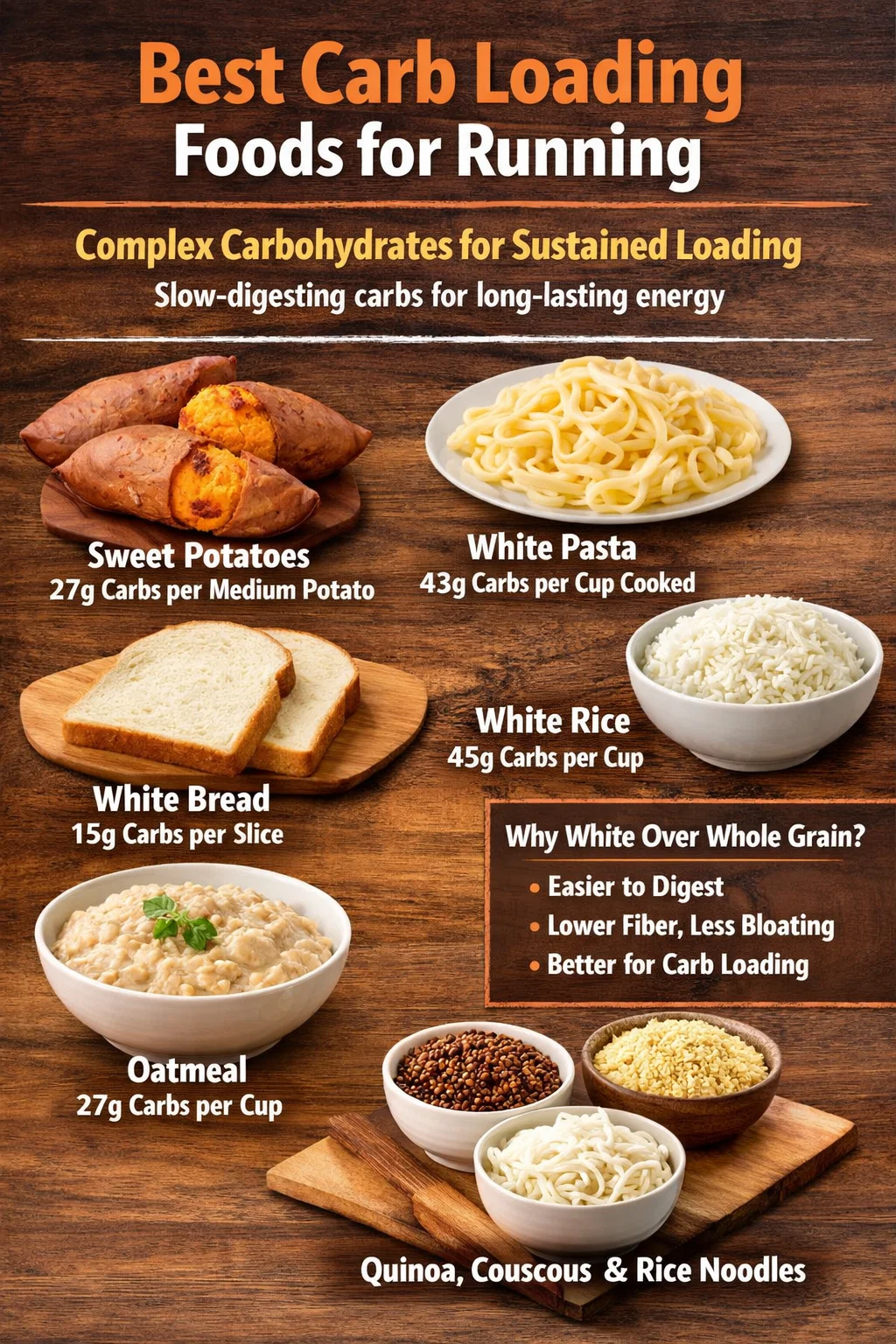
Not all carbohydrates are equal for carbo loading. You want easily digestible complex carbs and some simple carbs for quick glycogen replenishment.
Complex carbs digest more slowly and provide sustained glycogen storage without spiking blood sugar.
Top choices:
Why white over whole grain during loading:
Whole wheat bread and wheat pasta are healthier daily choices, but their higher fiber content can cause bloating or GI distress when eating large carb volumes. During carb loading, prioritize digestion over fiber.
Simple carbs provide rapid glycogen replenishment and are useful between meals or on race morning.
Top choices:
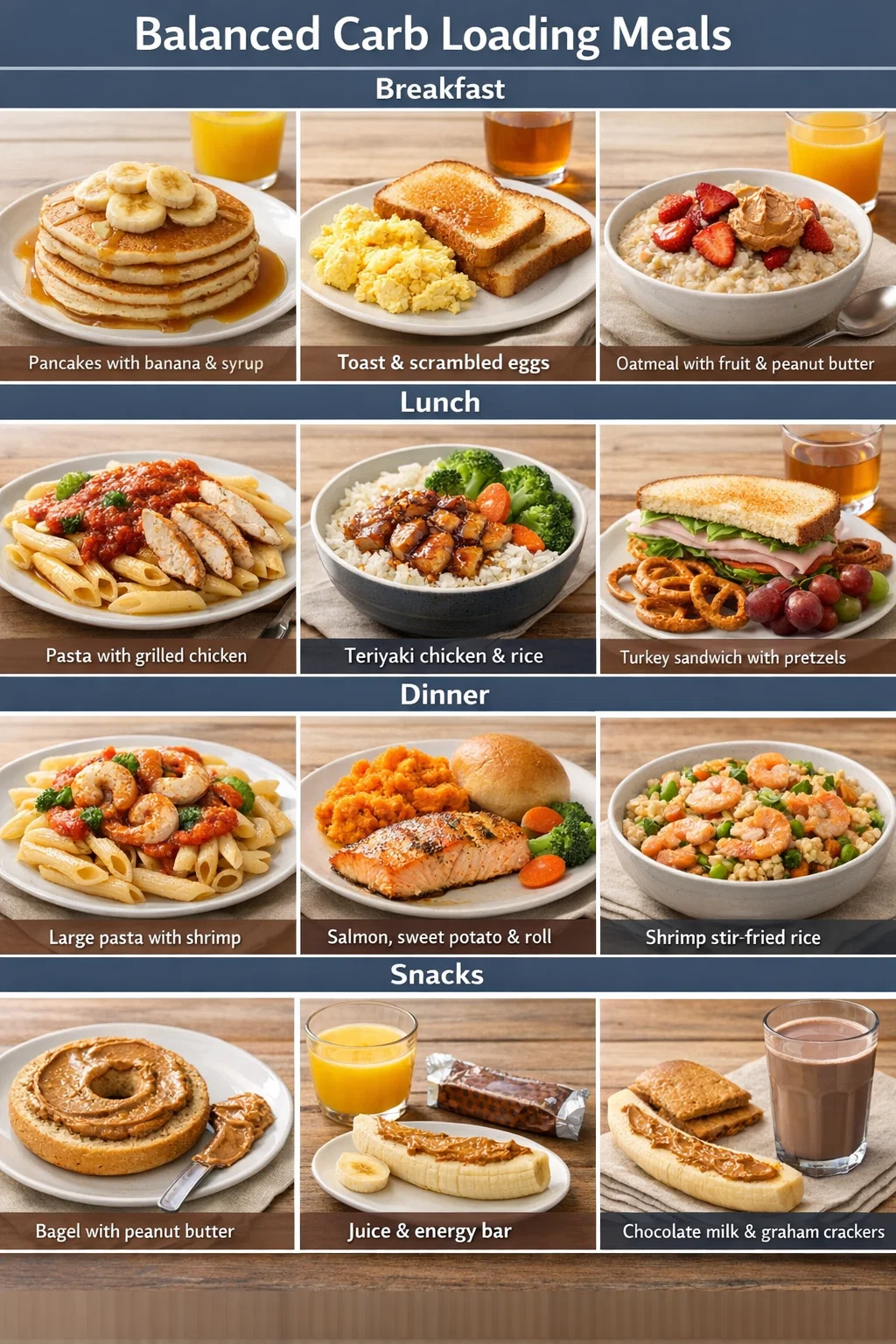
Don't just eat plain pasta. Include moderate lean protein and minimal healthy fats for balanced nutrition.
Sample meals:
Breakfast:
Lunch:
Dinner:
Snacks:
High-fiber foods: Beans, lentils, large amounts of vegetables (they fill you up and cause bloating)
Excessive healthy fats: Avocado, nuts, oils (slow digestion, take up calorie space needed for carbs)
Heavy protein: Large steaks, fatty meats (harder to digest, unnecessary during loading)
Unfamiliar foods: Never experiment with new foods during carb loading. Stick to what your stomach tolerates.
Alcohol: Dehydrates and impairs glycogen storage.
Spicy or acidic foods: Can cause GI distress on race day.
This is your peak carb loading day. Focus on familiar, easily digestible carbohydrate foods.
Your race day breakfast should be 2-3 hours before start time.
Best options:
Aim for 100-150g of carbs (more for larger runners or longer races). Avoid fiber, fat, and large protein portions.
Hydration: Sip water leading up to the race, but don't overhydrate. Stop drinking 30 minutes before start to avoid bathroom emergencies.
Even with perfect carb loading, you need additional carbs during a marathon. Your body can only store so much glycogen.
During-race fueling:
Carb loading delays depletion, but it doesn't eliminate the need for race-day fueling.
Mistake 1: Loading too early Starting 5-7 days out means you'll feel bloated and uncomfortable by race day. Stick to 2-3 days.
Mistake 2: Eating until uncomfortably full Loading means eating more carbs, not eating until you're stuffed. Focus on carb-dense foods in moderate portions throughout the day.
Mistake 3: Forgetting to taper trainingCarb loading only works if you reduce training volume. Continuing high mileage while loading means you burn through the extra carbs before race day.
Mistake 4: Trying new foods Carb loading week is not the time to experiment. Stick to familiar foods your stomach tolerates.
Mistake 5: Skipping carbs during the race Carb loading isn't a magic bullet. You still need in-race fueling for marathons.
Carb loading benefits endurance events over 90 minutes. Shorter races rely more on aerobic capacity and speed than glycogen stores.
ChAIron's AI coaching builds customized carb loading plans based on your race distance, body weight, and dietary preferences.
Automated carb loading timeline: The app calculates exactly when to start carb loading based on your race day, providing daily carb intake targets and meal suggestions.
Personalized food recommendations: ChAIron suggests specific carbohydrate foods and portions to hit your daily carb targets without overcomplicating meal planning. Whether you prefer pasta, sweet potatoes, or rice-based meals, the app adapts.
Race morning nutrition planning: Get a customized race morning breakfast plan with timing guidance based on your race start time and individual digestion patterns.
Integration with training taper: ChAIron automatically reduces your training volume during carb loading week, ensuring you're storing glycogen instead of burning it through unnecessary workouts.
.png)
.png)