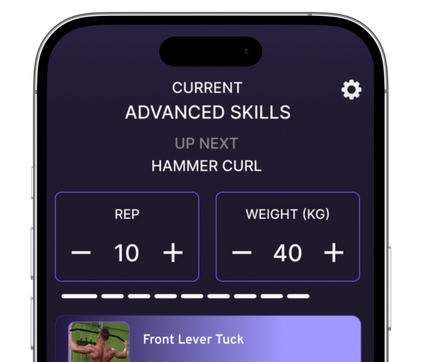
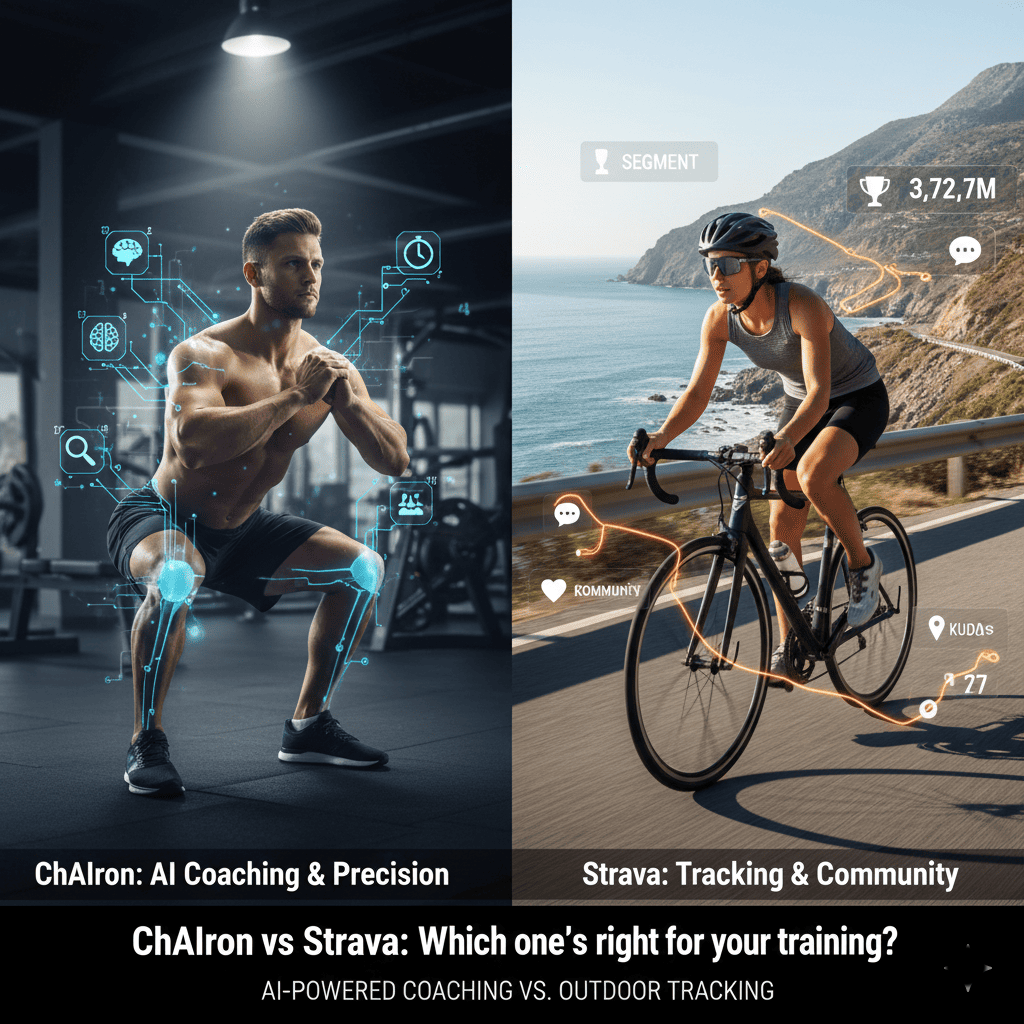
ChAIron vs Strava: Which one’s right for your training?
An unbiased comparison of AI-powered coaching and route/activity tracking for different types of athletes.
Ready to level up your training with smart feedback, not just stats?
Experience the difference with ChAIron’s AI-powered coaching, real-time form correction, and adaptive programming. Don’t just log your workouts, transform your performance.
If you’re serious about training, not just logging workouts, you’ll quickly notice that fitness apps fall into two very different categories.
One group focuses on performance, form, and movement quality. These apps act like a coach. They watch how you move, correct you when needed, and help you train with precision.
The other group focuses on tracking, routes, metrics, and community. These apps help you record your sessions, compare with others, and stay accountable through data and social features.
ChAIron sits firmly in the first category: it’s built for athletes who care about technique, progression, and injury-free performance. Strava sits firmly in the second: it’s built for people who want detailed workout tracking, route analytics, and a large community to compete with and learn from.
Both serve different types of athletes. Understanding which category your goals fall into helps you pick the right app or combine them if your training needs both tracking and skill development.
Why Compare These Two?
The philosophies of both apps are entirely different.
ChAIron: Download when you want to train smarter: with guidance, corrections, and personalised workouts. Acts like a coach, watching every rep.
Strava: Download to record runs or rides, track progress, and stay motivated through community features.
They can both be part of your fitness routine, but they don’t replace each other. This comparison helps you understand where each one shines.
What ChAIron Offers
ChAIron calls itself an “AI-powered fitness companion,” but what it really does is simple: it helps you train with good form so you don’t waste time doing bad reps.
The app doesn't just give workouts. It watches your form (via camera and computer vision), corrects technique in real time, adjusts programming based on performance, and focuses on movement quality over volume.
How ChAIron works:
Place your phone so the camera can see your movement.
The app watches your form using computer vision.
It tells you when something is off: squat depth, hip shift, posture, range of motion, fatigue breakdown, etc.
It adjusts workout intensity based on your performance and recovery.
Where ChAIron is strongest:
Focuses on movement quality, not just whether you moved that day.
Immediate feedback on squats, push-ups, and other movements.
Strength in precision, form maintenance, skill progression, and adaptive coaching.
Skill Training:
Handstands, planche progressions, calisthenics, and endurance workouts.
Requires joint alignment, stability, gradual progression, and precise feedback.
Analyzes micro-mistakes, shoulder angles, balance, and fatigue to act as a personal skill coach.
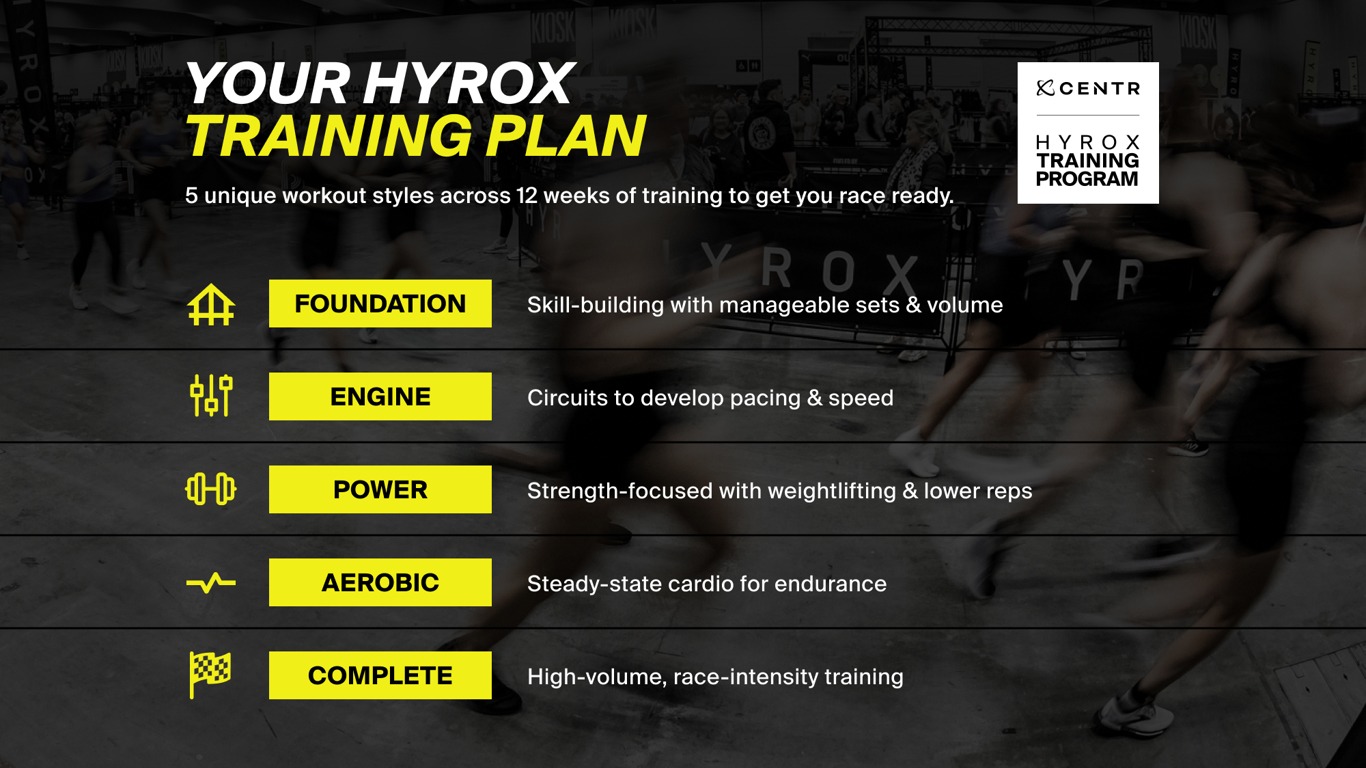
HYROX Prep and Event Training:
Corrects knee collapse during lunges.
Adjusts training based on fatigue.
Analyzes pace, cadence, and movement efficiency.
Auto-adjusts training volume week to week.
Strength Training:
Detects partial reps, shallow squats, early hip rise in deadlifts, spine rounding, knee valgus, uneven weight shifts.
Delivers coaching-level analysis through your phone.
Beginners & Solo Lifters:
Provides gentle corrections, visual cues, coaching explanations, and gradual progression.
Acts as a virtual personal trainer.
Strengths:
Great for solo training with real-time feedback.
Useful for event-specific training and skill-focused workouts.
Ideal for athletes who value analytics and improvement over just logging activity.
Considerations:
Requires camera setup, lighting, and space.
May be too detailed if your goal is simply staying active.
Cost, learning curve, and device compatibility may matter.
What Strava Offers
Strava is built for athletes who want to log, track, share, and analyse outdoor activities.
Key Strengths:
Outdoor running, cycling, and route-based training: GPS mapping, elevation analysis, split pacing, segment competition, cycling power metrics, hiking/trail tracking.
Community engine: Social feed lets you see friends’ workouts in real time for accountability.
Deep analytics (Premium): Heart-rate analysis, power metrics, pace-zone breakdowns, fitness–fatigue graphs, race-prediction tools, and custom goals.
Limitations:
Growing reliance on paid features for analytics and route tools.
Accuracy depends heavily on device (GPS watch recommended).
Encourages comparison rather than mindful training.
Route planning can be inconsistent.
Free version is limited; social feed may feel overwhelming for some.
Start your AI-powered fitness journey with ChAIron today and experience fully personalized workouts, real-time form correction, and adaptive coaching designed to help you train smarter, progress faster, and achieve your performance goals safely.

.png)
.png)