January 2, 2026
%20-%20mesha%20-%20Slack%20-%20%5Bapp.slack.com%5D.png)
Hybrid training weeks that combine different training modalities put a lot of demands on the body. All the different types of workouts, such as strength training, conditioning, running, and high-intensity intervals, are trying to use the same recovery resources. Besides, a great number of people are trying to support this heavy workload with a fixed daily intake or even by counting calories very closely.
This strategy usually results in tiredness, performance on hold, and burnout in the middle of the week.
The best way to nourish a hybrid week is to vary the food availability in accordance with the training needs, not with strict numbers. The main point is not perfection, but the synchronization of the workload with the energy that is available.
Hybrid training combines several energy systems. Resistance training harms the nervous system and muscles, while aerobic and endurance workouts lead to depletion of glycogen and thus increased overall energy expenditure.
Food requirements vary throughout the week based on:
A week with several hard sessions needs more fuel than a lighter deload week, even when body weight remains the same. If intake does not increase according to training load, recovery will be the first to suffer, not fat loss.
The fueling should be based on the entire week, not an average number applied to each day.
All training days differ in significance, and likewise, food intake should be unequal.
It is caloric tracking-free when one eats more on heavy days and less on light days, thus energy intake matches output naturally.
Carbohydrates are usually seen as a kind of enemy that has to be limited or earned. In hybrid training, however, they are considered a performance tool.
Carbs help to maintain:
On heavy days of training, the body gets support through the higher carbohydrate intake, and the stress is also reduced. On lighter days, naturally, the intake can decrease without getting rid of carbs completely.
Flexibility is the key here.
The amount of carbohydrates depends on the training demand, not the fixed rules. If carbs are completely removed from the diet, the workouts will be flat, the recovery will be poor, and the fatigue will be greater at the end of the week.
Mid-week is the time when fatigue accumulated so far makes under-fueling in hybrid training pretty obvious.
Some typical signs are:
Most people take these signs as a need to push harder or cut down on food even more. In fact, they mostly indicate that the energy intake is less than what the training demands.
To the contrary, ignoring these signals results in missed sessions, less output, or forced deloads.
A simple way to fuel a hybrid week without counting calories is to anchor intake to training demand.
This framework allows intake to rise and fall naturally with workload. It removes the need for tracking while still supporting performance, recovery, and consistency.
The goal is not to achieve perfect balance each day, but appropriate balance across the week.
How to Adjust Intake Without Overthinking It
Managing a hybrid training week does not have to be done using complex systems. Just small, observable changes will suffice.
On the days that training is very demanding and sessions are long or intense, meals need to be more filling. On these days, the body usually signals an increase in appetite for a reason. Eating more, especially carbohydrates, for performance and recovery support can be done without measuring numbers because it is a natural process and unnoticeable.
On the lighter training days, the body signals less hunger. Therefore, meals can be smaller, implying no food omission or restriction imposition. Letting the appetite dictate the serving size while maintaining the meal structure can be good.
If the training quality goes up, the recovery feels easier, and the energy does not change across the week, then the intake is probably good. When those indicators go down, it often means that the food intake has to be increased, not decreased.
This way of doing things makes it easy and flexible to get the right fuel, rather than having a rigid plan.
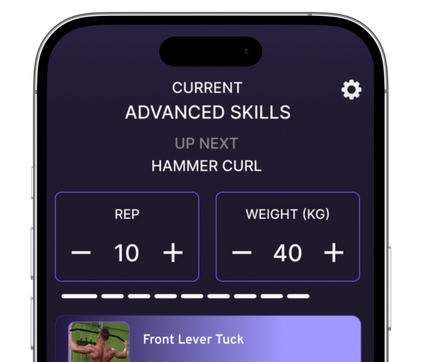
Pro tip: Chairon reviews your planned training week and sends in-app prompts like “Tomorrow is a heavy day, bump carbs at lunch and dinner” so your fueling automatically syncs with session intensity and you don't need to overthink your training week nutrition
No, you can fuel effectively by letting your intake rise and fall with training load instead of sticking to a fixed daily number. Eating more on heavy days and a bit less on light days lets energy intake naturally match output.
Keep regular meals every day, increase carbohydrate portions on heavy days, and maintain consistent protein across the week. On light days, slightly reduce portions without skipping meals, and prioritize meals before and after demanding sessions.
Focus on basics like lean proteins, easy-to-digest vegetables, carbohydrate staples (rice, potatoes, oats, fruit), and simple snacks that help you avoid skipping meals.
Yes. Matching food intake to training demand across the week supports performance, recovery, and more stable energy, which is more effective than aggressive short-term calorie cuts.
Hybrid training requires flexible energy inputs. Frequently, the fixed calorie targets and rules are not in agreement with the mixed training realities.
By adjusting the diet according to the intensity of the daily workout, the athletes can perform at their best without counting calories. Carbohydrates turn into a tool, recovery gets better, and the fatigue experienced in the middle of the week goes down.
When nutrition is in line with training, it is less difficult to be consistent, and therefore progress comes and that's solely why ChAIron nutrition was designed for. Chairon tracks session quality, RPE, and sleep, then flags under-fueling signs (heavier legs, low motivation, lingering soreness) and suggests simple meal tweaks to restore energy before burnout hits.
.png)
.png)