
November 24, 2025
Since its inception in 2018, HYROX has grown so much. In 2025, HYROX conducted nearly 80 global races with over 550,000 athletes participating. HYROX is more than just a fitness competition. It’s a full-body test of endurance, strength, speed, and mental grit. With eight functional workout stations interspersed with 1 km runs, HYROX sits at the intersection of endurance sports and strength training.
To perform your best, you can’t just train hard; you also have to fuel your body smart. Since nutrition plays a pivotal role in maximizing energy, promoting recovery, and building lean muscle, if you are going to participate in a HYROX race event, you need to prepare your body to handle everything from sled pushes to wall balls, and for that, nutrition is a must.
This guide will help you create an effective nutrition plan tailored for your HYROX training, whether you’re a first-time competitor or a seasoned athlete looking to level up.
Before you can design your nutrition plan, it’s important to understand the energy systems that HYROX challenges. A HYROX race typically takes 60–90 minutes to complete, depending on your fitness level. That means it’s primarily an aerobic endurance event, but with intense bursts of anaerobic effort, like heavy sled work or burpees. To fuel this combination, your diet needs to support:
The key is balance. You can’t simply “eat clean.” You need a strategic plan that supports performance and recovery while maintaining lean muscle and minimizing fatigue.
HYROX demands a hybrid approach to eating, much like the sport itself, and sources consistently highlight a few foundational tactics that can elevate your game. These aren't just theories; they're battle-tested by competitors pushing their limits in global events.
Every experienced HYROX athlete agrees: this is an endurance-dominant event. Carbohydrates aren't "optional"; they're the primary energy source that keeps you moving through eight 1km runs and those brutal stations. Most athletes carb-load in the final week, with emphasis on the day before and morning of the race. Pasta, rice, bagels, and oats dominate the menus.
Never experiment on race day
This is the single most repeated piece of advice across the entire HYROX community. You must eat what you’ve tested repeatedly in training. Standard protocol:
New foods, new gels, new timing? Absolute suicide. Your gut will punish you during burpee broad jumps.
Hydration + electrolytes: a must!
Dehydration hits HYROX athletes faster than in almost any other sport due to the indoor heat and constant intensity. Prioritize hydration with electrolyte-infused water; many athletes prioritize this even above carb precision.
Smart macro timing around training sessions
Before hitting the gym, load up on easily digestible carbs and electrolytes about 90 minutes beforehand. Post-session, recovery reigns supreme with a protein-carb combo within 90 minutes, leaning heavier on protein (~2g per kg body weight) alongside electrolytes. This accelerates repair, helping you bounce back for the next grind.
HYROX demands high output; underfueling can lead to breakdowns, injuries, or stalled progress. Track daily calories to match training demands.
Ensure this step is done 2–3 weeks before your race to set a stable base.
Drink 3–4 liters of water daily, adjust for body size and sweat rate. Include electrolytes during workouts. Monitor urine color (pale yellow ideal) and weigh pre/post-training to gauge fluid needs.
Step 3: Dial in your macronutrient targets for training
Track macros via an app; adjust carb/protein according to training type.
Pre-workout (90 min): easy-digestible carbs + electrolytes, minimal protein/fat
Post-workout (within 90 min): carbs + protein + electrolytes
Stick to tested combos to avoid gut issues.
7–10 days out: gradually increase carbs by 1–2g/kg while maintaining calories
Final 3–4 days: carb-rich meals, e.g., pasta, rice, bagels
Night before: big pasta meal for glycogen top-up
Maintain protein, reduce training volume
Golden rule: only tested foods.
30–90 min post-race: digestible carbs + protein + electrolytes
Next day: balanced macros, protein for repair, carbs to replenish
Reflect on performance to refine for next training/race
Supplements that support HYROX training
Test all supplements in training, not on race day.
Monitor, adjust, and listen to your body
Regularly assess: energy levels, recovery, muscle soreness, body weight, sleep quality, mood. Adapt nutrition as training evolves.
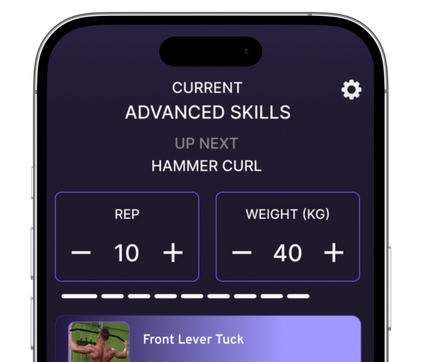
If you’re following a structured HYROX nutrition plan, pairing it with structured training helps you progress faster. ChAIron’s AI coach gives real-time form feedback across all HYROX movements so you recover better, perform stronger, and stay injury-free.
.png)
.png)