December 4, 2025
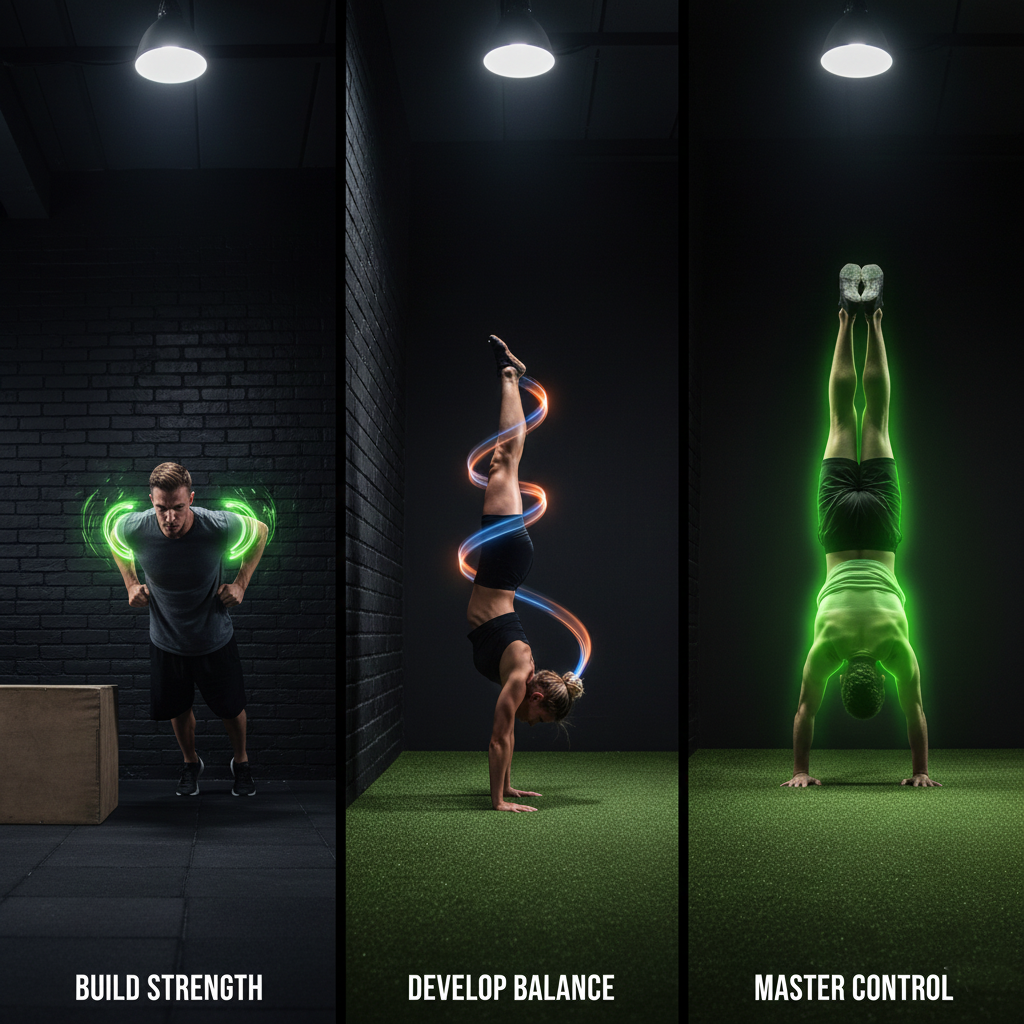
There's something undeniably powerful about a perfectly held handstand. It's part gymnastic control, part raw strength, and part mental composure. Holding your entire body upside down, supported only by your hands, isn't just a party trick; it's one of the best displays of functional strength and body awareness you can achieve.
But here's what most people don't realize: a handstand isn't about being strong enough to hold yourself up. It's about having the right kind of strength in the right places, shoulder stability, core compression, wrist conditioning, and the spatial awareness to know where your body is in space when blood is rushing to your head.
You can have a 200-pound bench press and still struggle with a handstand. You can run marathons and still fall over immediately when you kick up. That's because handstands require a specific combination of straight-arm pressing strength, overhead mobility, midline tension, and balance that most traditional training doesn't build.
This article breaks down the exact exercises you need to develop each component, from your first wall hold to a rock-solid freestanding handstand that you can hold for 30+ seconds.
Before we dive into exercises, let's be clear about what a handstand actually requires:
Your shoulders need to actively push you away from the ground (scapular elevation) and maintain that position under your full bodyweight. Weak or passive shoulders = immediate collapse.
Handstands put 100% of your bodyweight on your wrists at an extreme angle. Unconditioned wrists = pain, tendonitis, and forced breaks from training.
A handstand is a vertical hollow body hold. If you can't maintain a tight, controlled body line on the ground, you won't be able to maintain it inverted.
Limited overhead shoulder mobility = an arched back in handstand (which looks bad and can strain the lower back). Limited hip flexion = inability to pike or press into a handstand.
Your body needs to learn where "center" is when you're upside down. This only comes from practice, hundreds of attempts where you fall, adjust, and try again.
Most people are held back by fear of falling, not lack of strength. Learning to exit safely removes the mental block that keeps you at the wall.
Now let's build all of that.
Duration: 3–4 weeks
Goal: 60-second wall plank hold with elevated shoulders, comfortable overhead position, zero wrist pain
Before you go inverted, you need to earn your overhead position. This phase focuses on wrist prep, scapular activation, and building the baseline strength to support your bodyweight overhead.
Duration: 5–10 minutes (never skip this)
This isn't optional. Your wrists will take 100% of your bodyweight at an extreme angle. Skipping prep = pain and setbacks.
Exercises:
Why it matters: Handstands put an extreme load on wrists. Unprepared wrists = tendonitis, pain, and forced rest. Build resilience now so you can train consistently later.
Common mistakes:
Sets/Reps: 3×12–15 reps
How to do it: Start in plank position. Without bending your elbows, push your upper back toward the ceiling (protract your shoulder blades), then lower back down (retract). Your shoulder blades should move, but your arms stay straight.
Progression: Add scapular push-ups in pike position (hips elevated) by week 2–3.
Why it matters: Your shoulders need to actively push you away from the ground in a handstand, not just hold you there passively. This drill teaches that exact pattern. Weak scapular control = collapsed handstand.
Form checkpoints:
Common mistakes:
Sets/Reps: 3–4 sets of 8–12 reps
How to do it: Start in downward dog position (hips high, hands shoulder-width apart). Lower your head toward the floor between your hands, keeping elbows tracking back (not flaring wide). Press back up.
Progression:
Why it matters: This builds the exact pressing pattern you'll use in a handstand, as well as vertical pressing strength with your bodyweight. If you can't do 10 solid pike push-ups, you're not ready to hold a handstand for long.
Form checkpoints:
Common mistakes:
Sets/Time: 3–4 sets × 30–60s holds
How to do it: Face a wall, place your hands 6–8 inches from the wall, and walk your feet up until your chest nearly touches the wall. Push shoulders actively toward the ceiling (scapular elevation), lock ribs down, and squeeze glutes.
Progression:
Why it matters: This is your base camp. You'll spend weeks here, and that's exactly what should happen. If you can't hold a wall plank for 60 seconds with perfect form, you're not ready to go freestanding.
Form checkpoints:
Common mistakes:
Sets/Time: 3–4 sets × 30–45s holds
How to do it: Lie on your back. Lift shoulders and legs slightly off the floor, arms extended overhead. Press lower back into the ground. Maintain full-body tension; imagine pulling the ribs toward the hips and the heels away from the head.
Progression:
Why it matters: A handstand is a vertical, hollow-body hold. If you can't maintain this position on the ground, you won't maintain it inverted. This is your core foundation.
Form checkpoints:
Common mistakes:
Sets/Time: 3 sets × 20–30s each stretch
Exercises:
Why it matters: Limited overhead mobility = arched back handstand. You need full shoulder flexion (arms straight overhead without compensating through your back) to achieve a straight handstand line.
Form checkpoint: Can you touch your hands to the wall overhead with arms straight, ribs down, and no lower back arch? If not, you need more mobility work.
Duration: 4–6 weeks
Goal: 45–60s chest-to-wall hold, 30s stomach-to-wall hold, comfortable being inverted
Now you're going upside down. This phase introduces inversion while building the strength to stay there. Your nervous system needs time to adapt; expect the first few sessions to feel disorienting.
Sets/Reps: 3–5 controlled reps per set
How to do it: Start in a plank with feet on the wall. Walk feet up the wall while walking hands closer to the wall, until the chest nearly touches the wall. Reverse the movement slowly: walk the hands away from the wall, then step away from the wall.
Focus: Controlled movement. No kicking or rushing. This teaches you how to safely get into and out of a handstand.
Why it matters: This is your entry and exit practice. Rushing this drill = bad kick-up habits that take months to unlearn. Master the slow, controlled entry first.
Form checkpoints:
Common mistakes:
Sets/Time: 4–5 sets × 30–60s holds
How to do it: Face the wall, hands 6–8 inches from the wall, kick up until the chest lightly touches the wall. Push shoulders toward the ceiling, lock ribs down, and squeeze glutes. Hold.
Progression:
Why it matters: This is your primary strength builder. You'll live here for weeks. That's not a plateau, that's mastery. Perfect this position before rushing to freestanding.
Form checkpoints:
Common mistakes:
Sets/Reps: 3–4 sets × 10–15 reps
How to do it: In chest-to-wall handstand, push shoulders up toward the ceiling (elevate scapulae), hold 2 seconds at the top, and lower with control. This should feel like you're "growing taller" through your shoulders.
Why it matters: Passive shoulders = collapsed handstand. This drill teaches you to actively push through the position rather than just hang there.
Form checkpoint: If your shoulders aren't burning after 10 reps, you're not pushing hard enough.
Sets/Time: 3–4 sets × 15–30s holds (introduced week 3–4)
How to do it: Kick up to the wall with your stomach facing the wall, heels lightly resting. This position requires more balance than chest-to-wall because you can't lean into the wall as much.
Why it matters: This is the bridge between wall support and freestanding. You're learning to balance while still having a safety net close by.
Progression: Start with heels touching the wall often, progress to minimal wall contact (only tapping when you lose balance).
Form checkpoints:
Sets/Reps: 3 sets × 10–20 taps total (5–10 per hand)
How to do it: In chest-to-wall position, shift weight slightly to one hand, tap opposite shoulder with free hand. Keep hips square to the wall, no rotation.
Why it matters: Forces unilateral shoulder stability, which is essential for balance corrections in freestanding holds.
Common mistakes:
Sets/Reps: 3–4 sets × 8–12 pulls per leg
How to do it: In stomach-to-wall position, slowly pull one heel off the wall (1–3 seconds), return, then the other leg. Focus on maintaining a straight body line as you introduce instability.
Why it matters: This is targeted balance training with a safety net. You're teaching your body what "falling forward" feels like and how to correct it.
Progression:
Duration: 6–8 weeks
Goal: 5–10s freestanding hold, controlled bail from overbalance, confident kick-ups
You're strong enough now; it's time to balance. This is the hardest phase mentally. You'll have the strength, but your body won't know where the center is yet. You'll fall. A lot. That's not failure, that's how balance is learned.
Sets/Reps: 3–4 sets × 10–15 shifts per side
How to do it: In chest-to-wall position, deliberately shift weight onto one hand, hold 2–3 seconds, shift to the other side. Progress to shifting with one foot off the wall by week 3
Why it matters: A freestanding handstand requires constant micro-adjustments. This drill teaches your hands to feel weight distribution and make corrections.
Form checkpoint: Can you feel where your center of gravity moves when you shift? That's proprioception training.
Sets/Reps: 3–4 sets × 8–12 pulls
Progression:
Why it matters: This is a controlled, freestanding practice with an immediate safety net. You're teaching your body what "falling forward" feels like and how to correct before it's too late.
Sets/Reps: 4–6 sets × 2–5 second freestanding attempts
How to do it: Kick up to stomach-to-wall, find balance, pull both feet off the wall. Goal: hold without touching the wall. Tap back only when you lose balance.
Rest: 2–3 minutes between attempts (balance work is neurologically taxing)
Why it matters: This is the real work. Short, focused attempts teach balance faster than grinding long wall holds.
Common mistakes:
Sets/Reps: 5–8 sets × 3–5 attempts per set
How to do it: From a lunge, place hands shoulder-width apart, kick up lightly with the back leg. Focus on finding balance at the top, not kicking through it.
Progression:
Why it matters: Eventually, you need to kick up without a wall. Start practicing now, even if you only balance for half a second.
Form checkpoints:
Reps: 5–10 dedicated bail attempts per session
Exits to practice:
Why it matters: Fear of falling is what keeps people at the wall. Master the exit and you remove the fear. This unlocks progress faster than anything else.
Critical: Practice bails deliberately when you're fresh, not just when you panic. Build the motor pattern so it's automatic.
Sets/Reps: 3 sets × 6–10 taps total
How to do it: In a handstand (wall-assisted or freestanding if ready), shift weight to one hand, tap the opposite shoulder, and return. Start against the wall, progress to freestanding by week 6+.
Why it matters: Forces weight shifts and unilateral balance, exactly what you need for longer freestanding holds.
Duration: 8–12 weeks minimum (realistically: 6–12 months of ongoing practice)
Goal: 20–30s freestanding handstand, consistent kick-ups, calm exits, comfortable breathing inverted
Now it's about refinement. You can balance. Now you're building endurance, consistency, and control. Strength isn't your limiter anymore; time under tension is.
Reps: 10–20 attempts per session
Progression:
Rest: 1–2 minutes between attempts
Why it matters: Consistency comes from repetition. 100 kick-ups teach more than 10 perfect holds.
Sets/Reps: 5–8 sets × max hold (aim for 10–30s per attempt)
How to do it: Kick up, find balance, hold as long as form stays clean. The moment your line breaks (arch, pike, shoulder collapse), bail and reset. No grinding through bad positions.
Why it matters: You're training your nervous system to recognize and maintain perfect alignment. Grinding through bad form reinforces bad habits.
Sets/Time: 4–6 sets × 15–30s holds (build over weeks)
How to do it: Practice breathing normally while inverted. Inhale through the nose, exhale through the mouth. Start with 2–3 breaths per hold, work up to 5–6 breaths.
Why it matters: Most people hold their breath in handstands, which kills endurance and creates unnecessary tension. Learn to breathe, and your holds double.
Sets/Reps: 3–5 max-effort attempts per session
Goal: Hold as long as possible with perfect form. Track your PRs weekly.
Rest: 3–5 minutes between attempts
Why it matters: Once you can balance, the next goal is to improve your timing. This is where 5-second holds become 30-second holds.
Sets/Reps: 3 sets × 8–10 shifts per direction
How to do it: In freestanding hold, deliberately shift weight forward (fingertip pressure), then back (palm pressure). Feel the edge of your balance range without falling.
Why it matters: Balance isn't static; it's a constant series of micro-adjustments. This drill expands your balance "range" so small errors don't collapse your hold.
Sets/Reps: 3–5 sets × 5–10 steps forward
How to do it: Start with tiny "penguin steps" (shift weight, move hand 2–3 inches). Focus on maintaining a straight line while walking (no piking or arching).
Progression: Work up to longer walks (20+ steps) over months.
Why it matters: Walking forces dynamic balance and builds shoulder endurance under movement. It's the next evolution after static holds.
Phase 1–2 (Foundation & Wall Work):
Phase 3 (Balance Training):
Phase 4 (Freestanding Mastery):
Sets/Reps: 3 sets × 10 reps
How to do it: Stand with your back flat against the wall, arms in goalpost position. Slide arms overhead without arching lower back.
Why it matters: Strengthens shoulder mobility and teaches overhead positioning without compensating through your back.
Duration: 1–2 minutes before and after sessions
How to do it: Flow between cat pose (rounded back), cow pose (arched back), and child's pose (arms extended forward, hips to heels).
Why it matters: Opens up shoulders and thoracic spine, critical for maintaining overhead position without strain.
Sets/Reps: 2 sets × 8 per side
How to do it: In quadruped position, place one hand behind the head, rotate the upper body to open the chest toward the ceiling, and return.
Why it matters: Tight thoracic spine = compensated overhead position. This mobility work allows better shoulder positioning.
Most people think they need more strength to hold a handstand. What they actually need is more attempts.
Balance isn't something you think your way through.
Your nervous system learns it through repetition, hundreds of attempts where you kick up, find center for a moment, lose it, and try again.
Here's the truth: you'll probably fail 100+ times before your first solid hold. That's not a sign you're doing it wrong.
That's the process.
Also read: ChAIron’s Handstand Progression Guide for beginners
The biggest thing holding people back isn't weak shoulders, it's fear of falling.
Here's how to fix it:
Once you master the cartwheel exit, the fear disappears. You realize falling isn't dangerous, it's just part of the drill.
You think your handstand looks like this: straight line, perfect alignment.
It actually looks like this: arched back, piked hips, or shoulders sinking.
Your brain can't accurately sense body position when you're inverted. The camera doesn't lie. Film every session, review weekly, and adjust based on what you see.
Some sessions will feel effortless, you'll hit a new PR and wonder why you ever struggled.
Other sessions will feel like you forgot how to balance entirely. You'll hit 10-second holds one day, then fail 20 attempts in a row the next.
That's normal. Skill work is nonlinear. Trust the process, stay consistent, and remember: a 30-second handstand isn't 3x harder than a 10-second hold, it's 10x harder. Every second you add at this level is a major achievement.
Causes:
Fixes:
Causes:
Fixes:
Causes:
Fixes:
Causes:
Fixes:
Causes:
Fixes:
Causes:
Fixes:
Once you've mastered the freestanding handstand, here's where you can take it:
.png)
.png)