December 23, 2025

A push day workout is one of the most effective ways to develop upper body strength, increase muscle mass, and improve overall performance in the gym.
Whether you’re following a push–pull split or a full training schedule, structuring your push day correctly can make the difference between average results and serious muscle gain.
Our experts at ChAIron break down everything you need to know, from the muscles worked and exercise selection to sets, reps, and progression, so you can design the best push day workout for long-term success.
A push day focuses on any push exercise where you move weight away from your body. These movements primarily train the chest, shoulders, and triceps, often referred to as push muscles.
In contrast, a pull day targets your back and biceps using pulling motions.
Most push day workouts are part of a split routine that alternates between push, pull, and leg training.
This structure allows each muscle group sufficient recovery time while maximizing the efficiency of strength training.
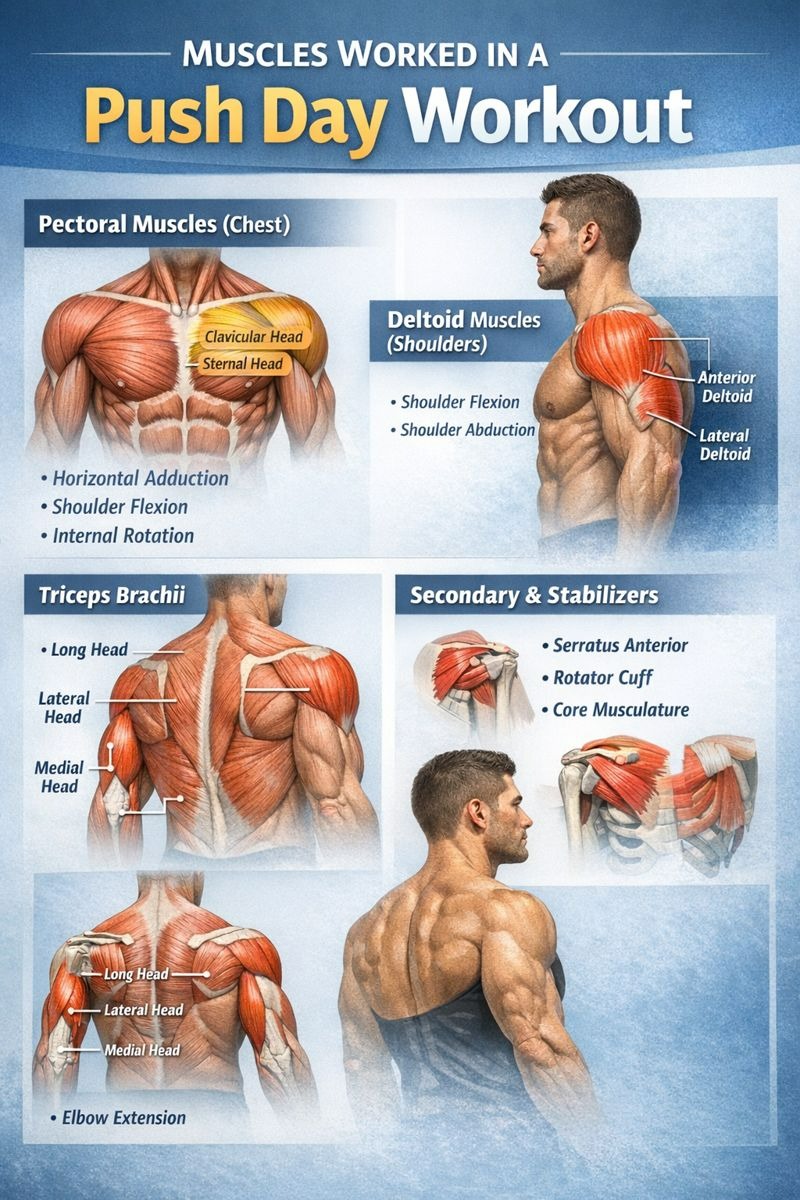
A push day workout primarily targets the muscle groups responsible for upper-body pushing and pressing movements. These muscles contribute to shoulder flexion, horizontal adduction, elbow extension, and stabilization during resistance exercises such as presses and flyes.
The primary muscles involved are the pectoralis major, deltoids, and triceps brachii, with several secondary stabilizers contributing depending on exercise selection and loading.
The pectoralis major is the primary chest muscle involved in push movements. It consists of two functional heads:
The pectoralis major functions primarily in horizontal adduction, shoulder flexion, and internal rotation of the humerus. It is heavily activated during pressing movements such as the bench press and chest fly variations.
The pectoralis minor, located deep to the pectoralis major, does not contribute directly to pressing force but plays a key role in scapular stabilization, particularly by anteriorly tilting and depressing the scapula.
The deltoid muscle is composed of three primary heads, all of which may be involved to varying degrees in a push day:
Push day training predominantly stresses the anterior deltoid, with secondary involvement of the lateral deltoid depending on pressing angle and arm path.
The triceps brachii is a three-headed muscle responsible for elbow extension:
During push exercises, the triceps act as synergists to the pectorals and deltoids, with activation increasing as elbow extension demand rises (e.g., lockout phases of presses). Overhead triceps exercises preferentially load the long head due to increased shoulder flexion.
While not primary targets, several muscles contribute to stability and force transfer during push movements:
Below is a balanced push workout designed by the experts at ChAIron for both muscle growth and strength development.
Sets: 3–4 | Reps: 6–10
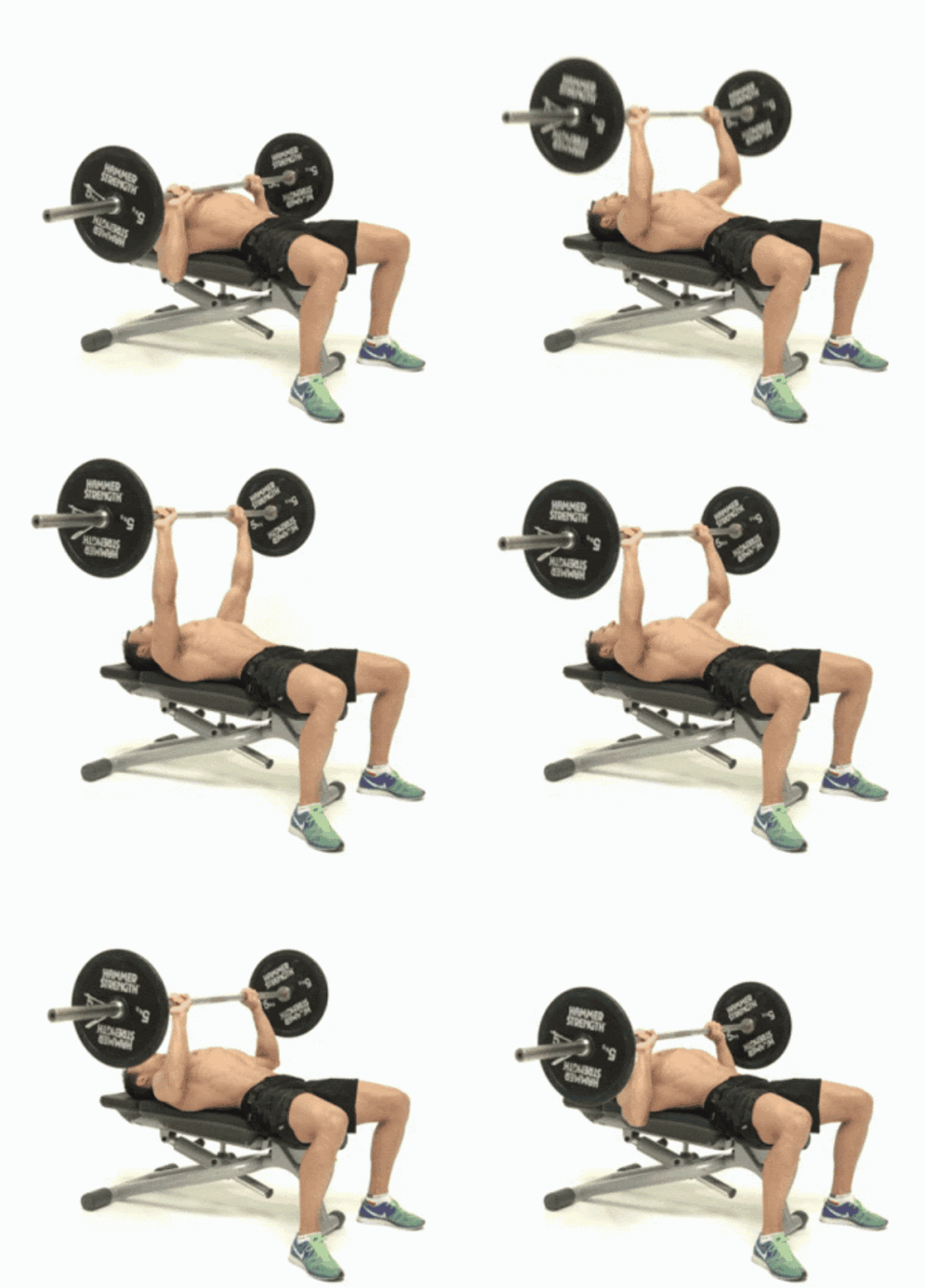
The barbell bench press is the foundation of any serious push day. It primarily targets the chest muscle while also engaging the shoulders and triceps.
This compound movement is essential for building muscle and improving pressing strength.
Sets: 3 | Reps: 8–10
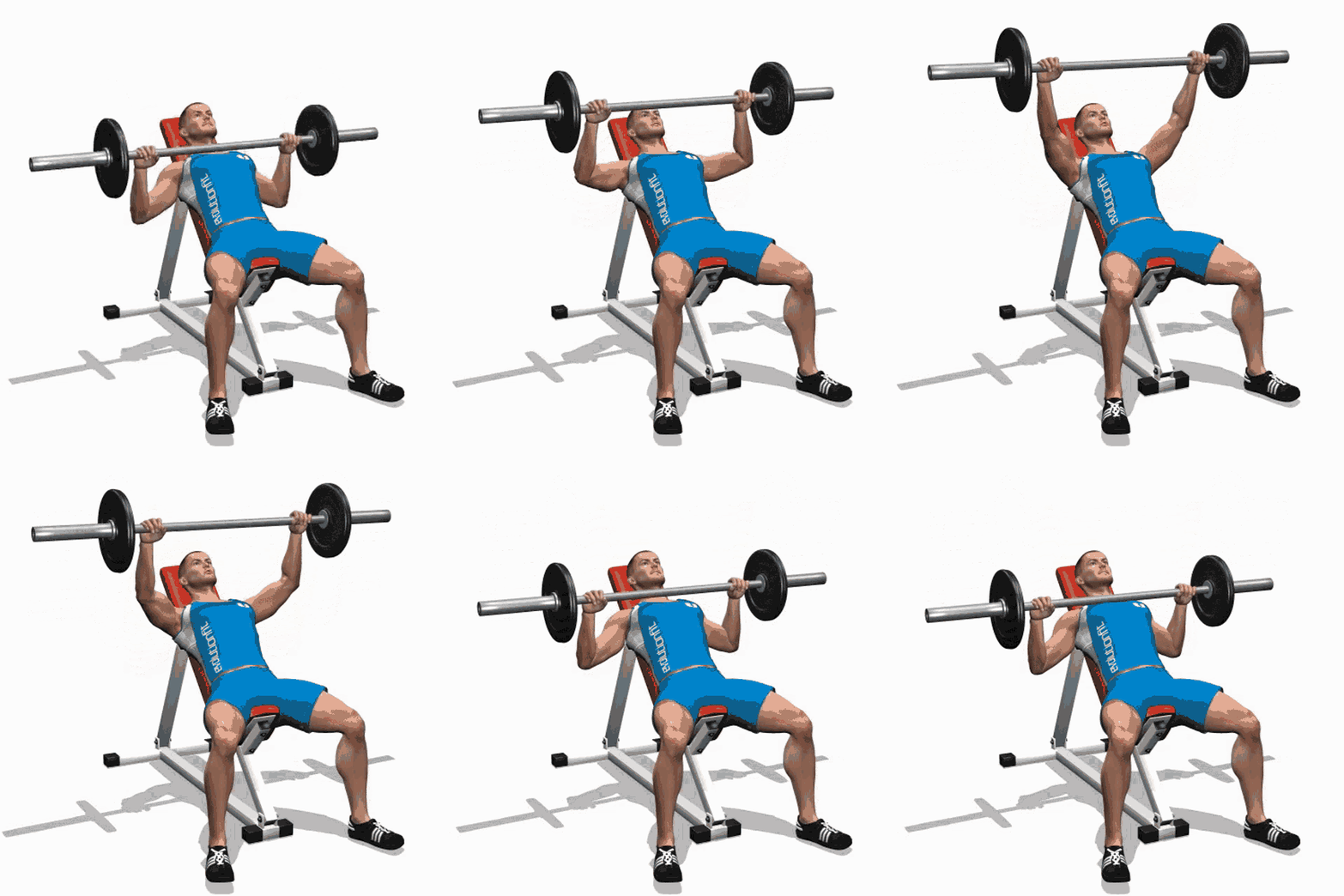
The incline bench press shifts emphasis to the upper chest and front shoulder. Keeping the bench at a moderate angle helps target fibers that the flat press misses.
This exercise supports balanced chest development and adds to overall muscle mass.
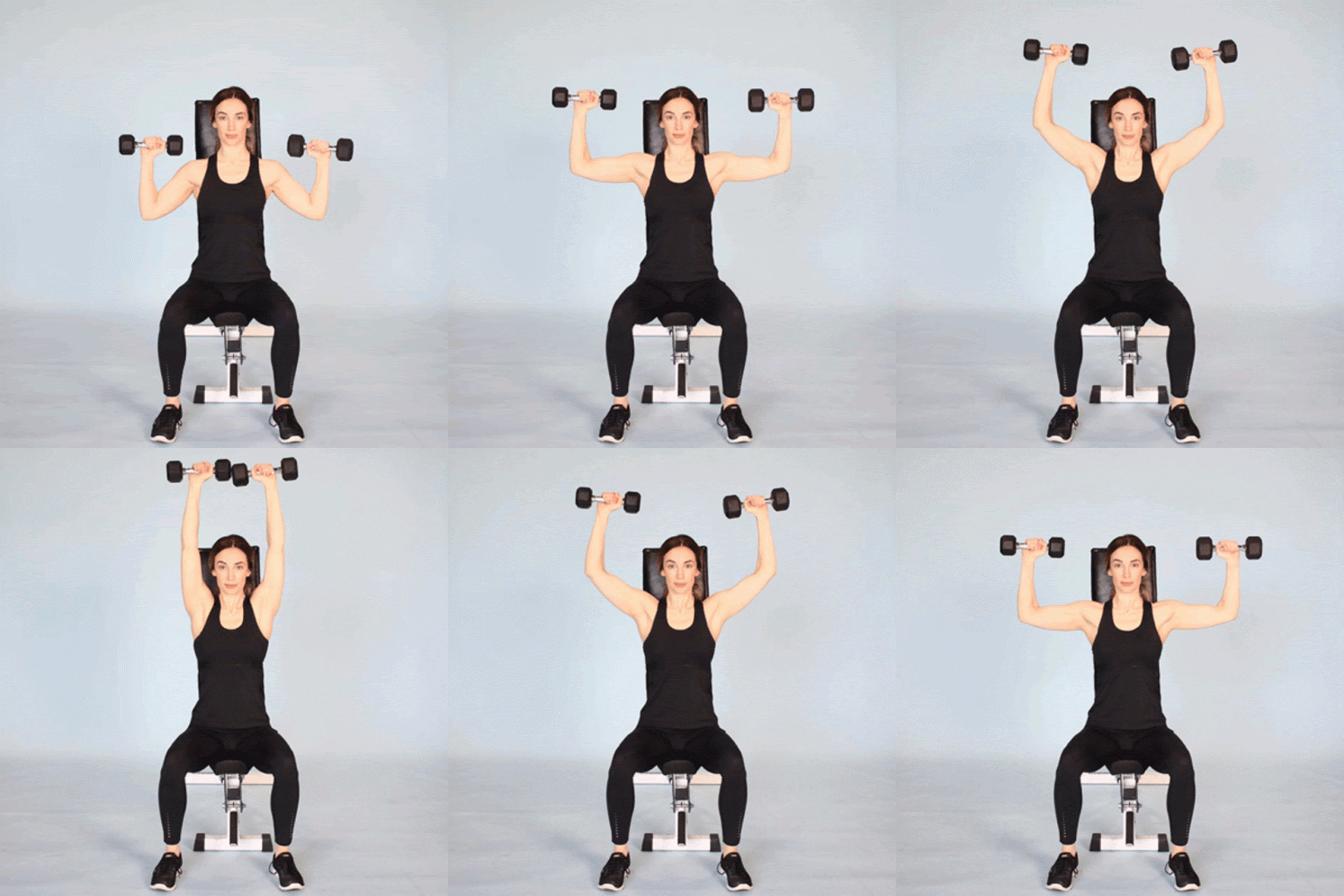
Sets: 3–4 | Reps: 6–10
The shoulder press is one of the best exercises for building overhead strength. Whether done with a barbell or dumbbells, it targets the shoulder muscles and upper arm.
Strong shoulders are critical for both aesthetics and functional strength.
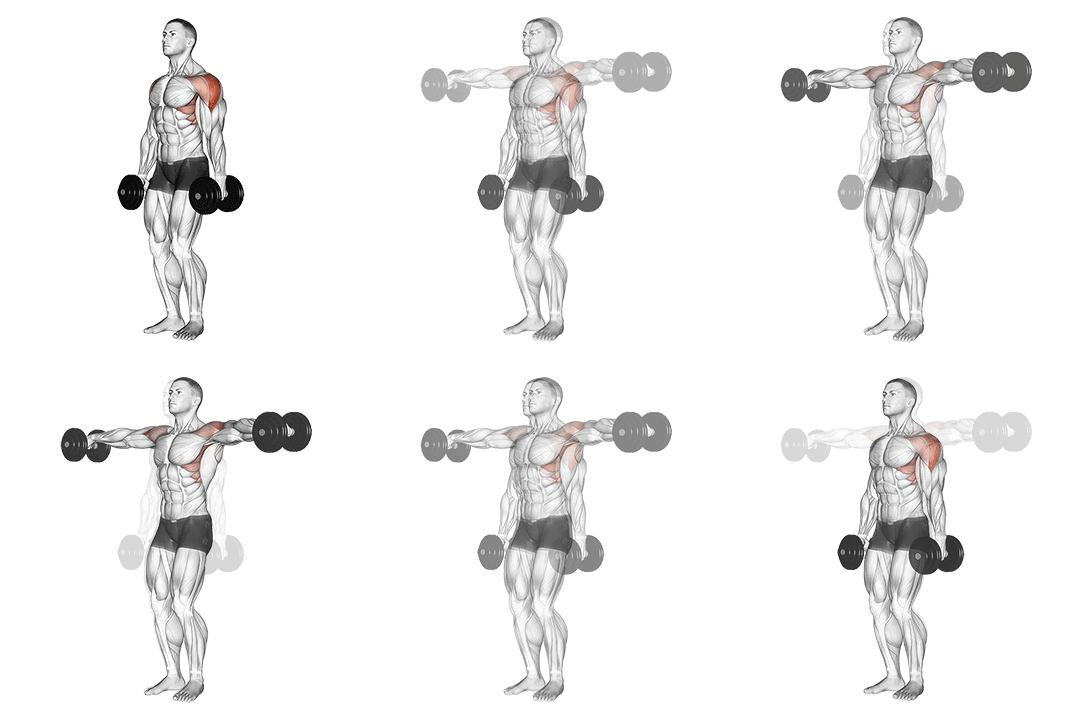
Sets: 3 | Reps: 12–15
The lateral raise is a classic isolation exercise that builds width in the shoulders.
This exercise enhances shoulder definition and improves symmetry.
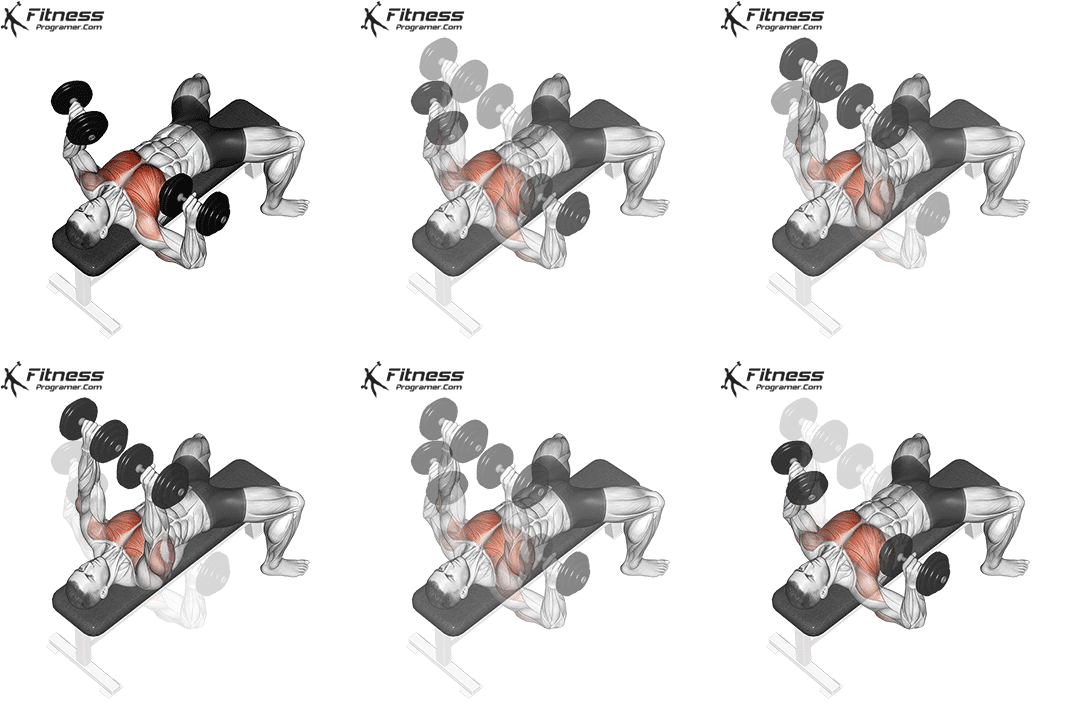
Sets: 3 | Reps: 8–12
The dumbbell chest press allows for a greater range of motion than barbells, encouraging balanced muscle hypertrophy.
It’s an excellent accessory movement for building muscle evenly.
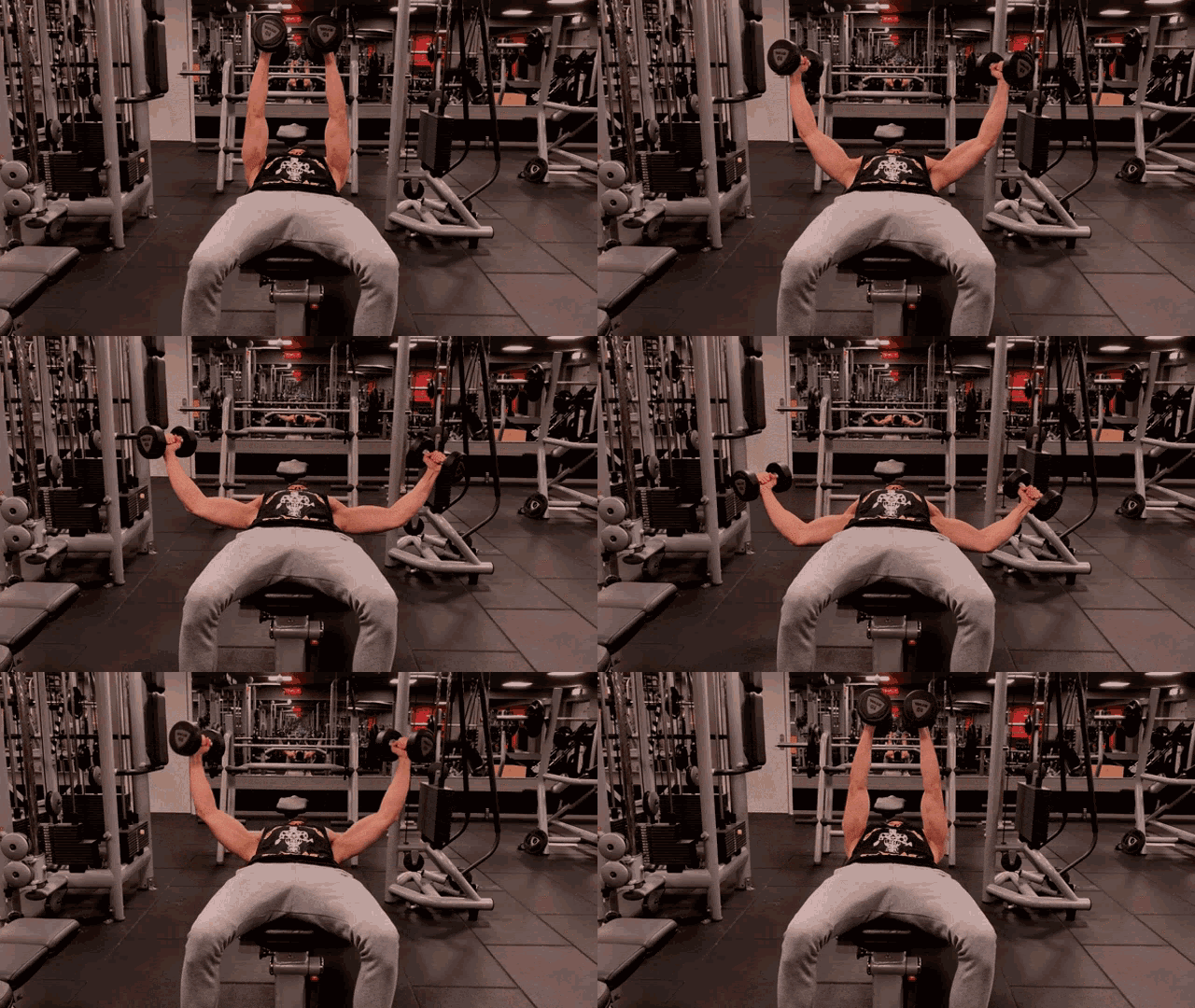
Sets: 2–3 | Reps: 12–15
A chest fly stretches the chest muscle under load, which is valuable for muscle growth.
This movement complements pressing exercises by targeting the chest in a different way.
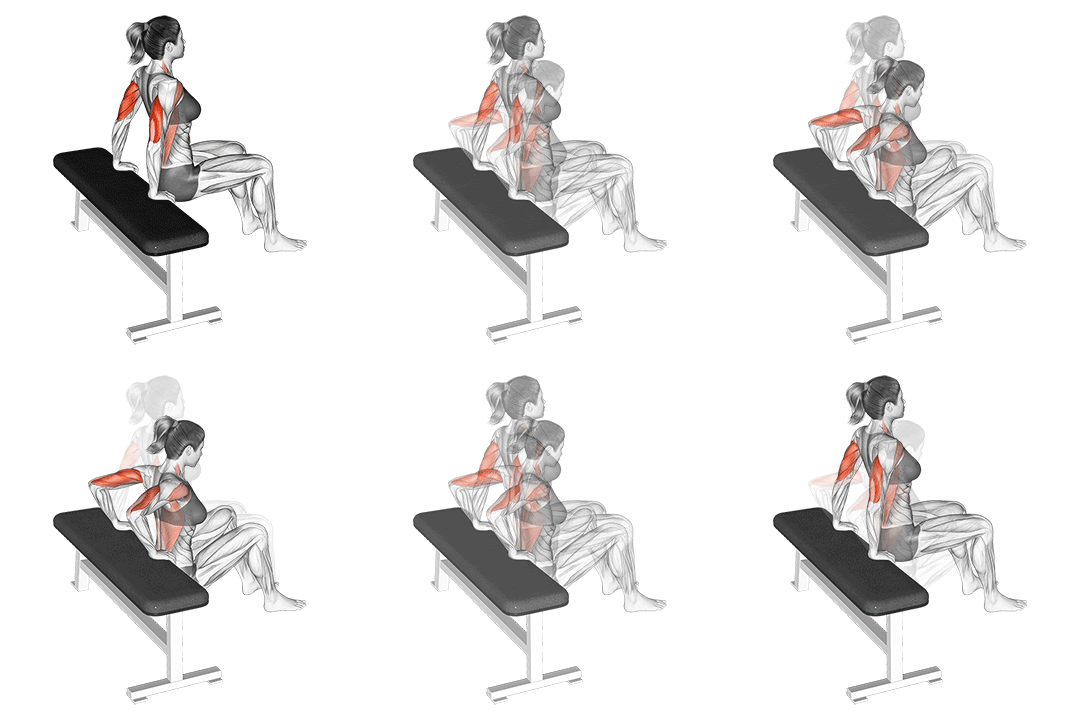
Sets: 2–3 | Reps: 8–12
The tricep dip is a powerful bodyweight exercise that emphasizes the triceps and shoulders.
It’s excellent for building raw triceps strength.
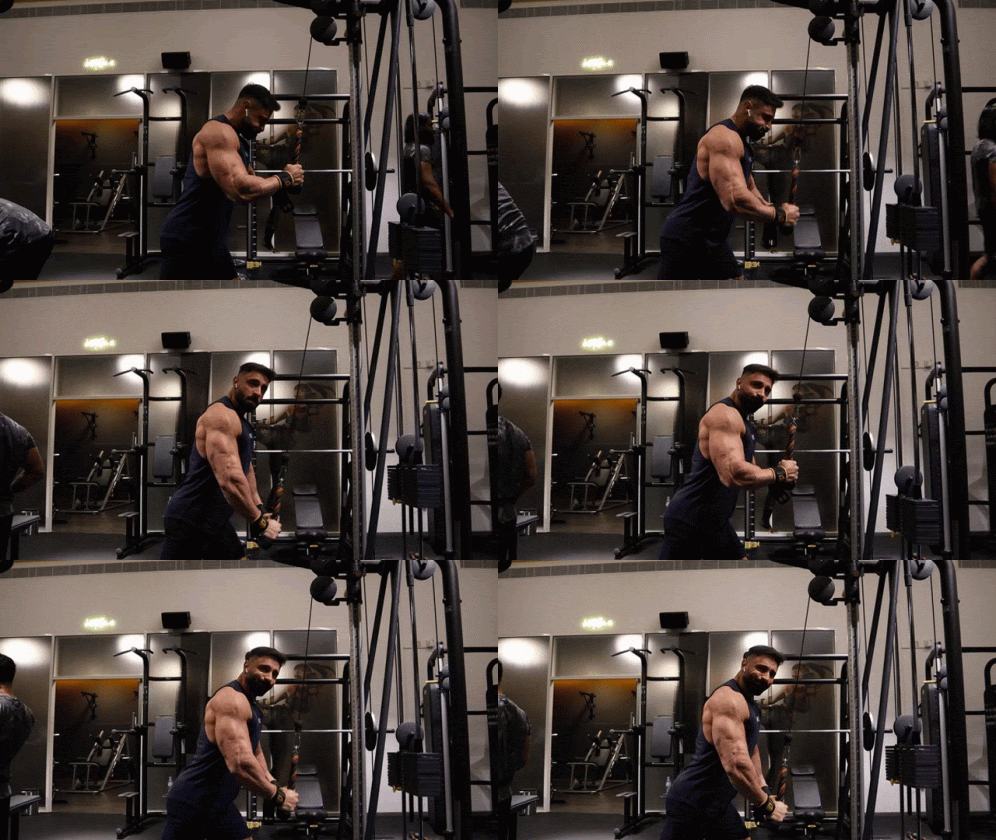
Sets: 3 | Reps: 10–15
The triceps pushdown, especially the cable tricep pushdown, isolates the triceps muscle and adds volume at the end of your workout.
You can also alternate with a close grip bench press for heavier loading.
For optimal muscle gain, most push day exercises work best in the 6–12 rep range. Compound lifts build strength, while isolation movements support targeted muscle development.
To continue building muscle, apply progressive overload by:
This approach supports long-term muscle hypertrophy and performance.
While push training builds pressing strength, pairing it with a structured pull day ensures balanced shoulder health and posture. Ignoring pulling movements can lead to muscular imbalances and stalled progress.
A balanced routine enhances resistance training outcomes and reduces injury risk.
If you want a push day workout that is curated as per your fitness levels, strengths, needs and nutrition, you can try downloading ChAIron for free. ChAIron serves as your personal pocket coach 24*7, helping you to gain the body you need, without exerting too much effort.
A properly structured push day workout is one of the most efficient ways to develop upper body strength, improve aesthetics, and support long-term muscle growth.
By combining compound lifts, isolation work, and progressive overload, you create a sustainable workout plan that delivers results.
Whether you’re new to the gym or refining your training, this best push day workout framework gives you everything you need to train smarter, lift stronger, and build real muscle.
A push day workout is a session centered on pushing movements, primarily pressing
weights away from your body to train your chest, shoulders, and triceps.
A push day primarily trains the pectoralis major (chest), the deltoids (shoulders), and the triceps brachii, with stabilizers such as the serratus anterior, the core, and the rotator cuff assisting.
Yes, 5 exercises are usually enough for push day, mainly if you include 2 big compound lifts (like bench and overhead press) plus 2–3 isolation moves for shoulders and triceps.
Beginners can absolutely do a push day by focusing on simple movements, lighter loads, and good form with bodyweight, dumbbells, or machines
A push day can be done at home using bodyweight moves like push-ups and dips, or with simple tools like dumbbells and resistance bands to effectively train the chest, shoulders, and triceps.
.png)
.png)