January 20, 2026

Let's be honest: starting to run as a beginner runner can feel overwhelming.
At what pace should you go?
How far?
How often?
Do you need expensive running shoes?
What if you can't even run for a minute without gasping for air?
Here's the truth: you don't need to run fast. You don't need to run far. You don't even need to run the whole time at first.
Running is one of the most accessible forms of exercise you can do. It's free, requires minimal running gear, fits into busy schedules, and delivers massive health benefits, both physical and mental. But it only works if you start smart, build gradually, and give your body time to adapt.
This guide walks you through exactly how to start running as a beginner.
You'll get a simple 4-week training plan, running gear advice, common mistakes to avoid, and realistic expectations so you can build a running routine that lasts.
Before we see the how, let's talk about the why:
Good news: you don't need much to start your running journey.
You don't need $200 premium racing shoes. But you do need a decent pair of running shoes, not your old gym sneakers or casual shoes.
What to look for when choosing the right running shoe:
Go to a running store if possible for gait analysis. If not, buy from a retailer with a good return policy. Finding the right running shoe helps prevent running injury and makes every workout more comfortable.
You don't need special running clothes, but comfort matters. Avoid cotton (it holds sweat and causes chafing). Look for moisture-wicking fabrics. Dress for the weather, and invest in a supportive sports bra if needed.
Here's the biggest mindset shift for beginner runners: stop thinking about pace or distance. Think about time.
In the first few weeks, your running goal isn't to run a certain distance or hit a certain speed. Your goal is to move consistently for a set amount of time, even if that means alternating between running and walking using run-walk intervals.
Focus on consistency, building the habit, and enjoying the process, not performance. This is how you build a sustainable running routine that lasts.
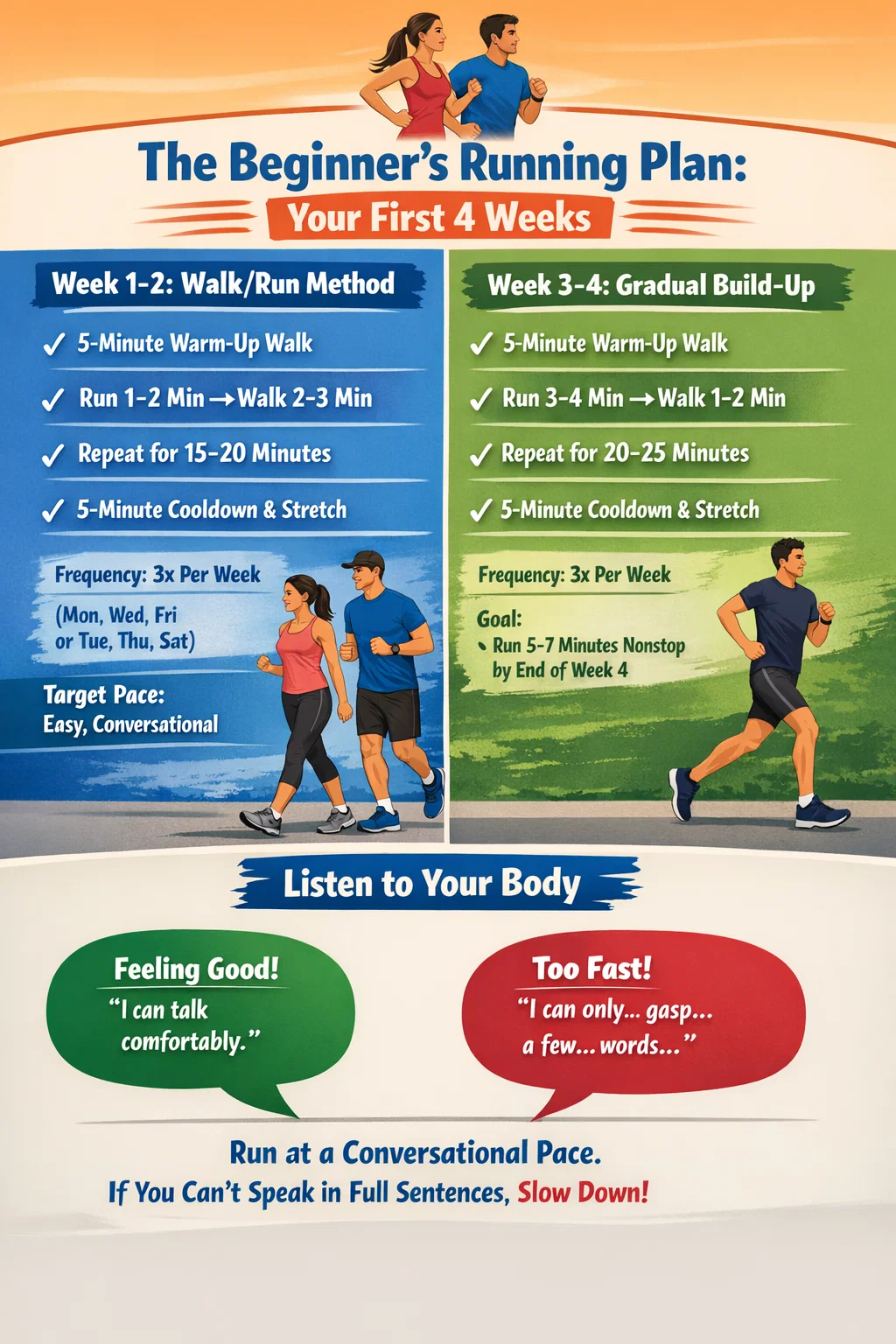
Here's a simple training plan to take you from zero running experience to confidently running for 20-25 minutes. This running program is designed specifically for beginners.
Workout structure for this beginner running workout:
Frequency: 3 times per week (Monday, Wednesday, Friday or Tuesday, Thursday, Saturday)
What it should feel like: During run intervals, you should be able to hold a conversation. This is your target pace. If you can't talk, slow down. During walk intervals, recover your breathing but keep moving.
Workout structure:
Frequency: 3 times per week
Progression: Each week, add 30 seconds to 1 minute to your run intervals. By the end of Week 4, aim to run 5-7 minutes continuously before taking a walk break. This gradual approach builds endurance safely and prepares you for longer runs in the future.
The biggest mistake beginners make is running too fast. Here's the rule: run at a conversational pace. If you can talk in complete sentences (even if slightly breathless), you're at the right pace. If you can only gasp out one or two words, slow down.
This pace might feel slower than you expect, but it's precisely what new runners need to build fitness without running injury.
Pushing too hard too soon leads to burnout or running injury. Start with run-walk intervals. Run slower than you think you should. Build gradually over weeks.
Many beginning runners try to match the pace of experienced runners and end up injured or discouraged. Remember: every runner started exactly where you are now.
Always warm up with 5 minutes of walking before running. Always cool down with 5 minutes of walking and stretching after. Take at least one full rest day per week.
Your body needs recovery time to adapt to your training program. This is when you actually get stronger.
Invest in proper running shoes. Focus on basic running form: upright posture, relaxed shoulders, midfoot landing, arms swinging forward-back (not across your body).
Poor proper running form and worn-out shoes are the fastest ways to develop a running injury. Film yourself occasionally to check your running form.
Run 2-3 times per week as a beginner runner, not 5-7 times. Your body needs recovery time to adapt and get stronger.
Consider adding cross-training 1-2 days per week, activities like cycling, swimming, or yoga that keep you active without the impact of running.
Adding strength training 1-2 times per week also helps prevent running injury and improves running performance.
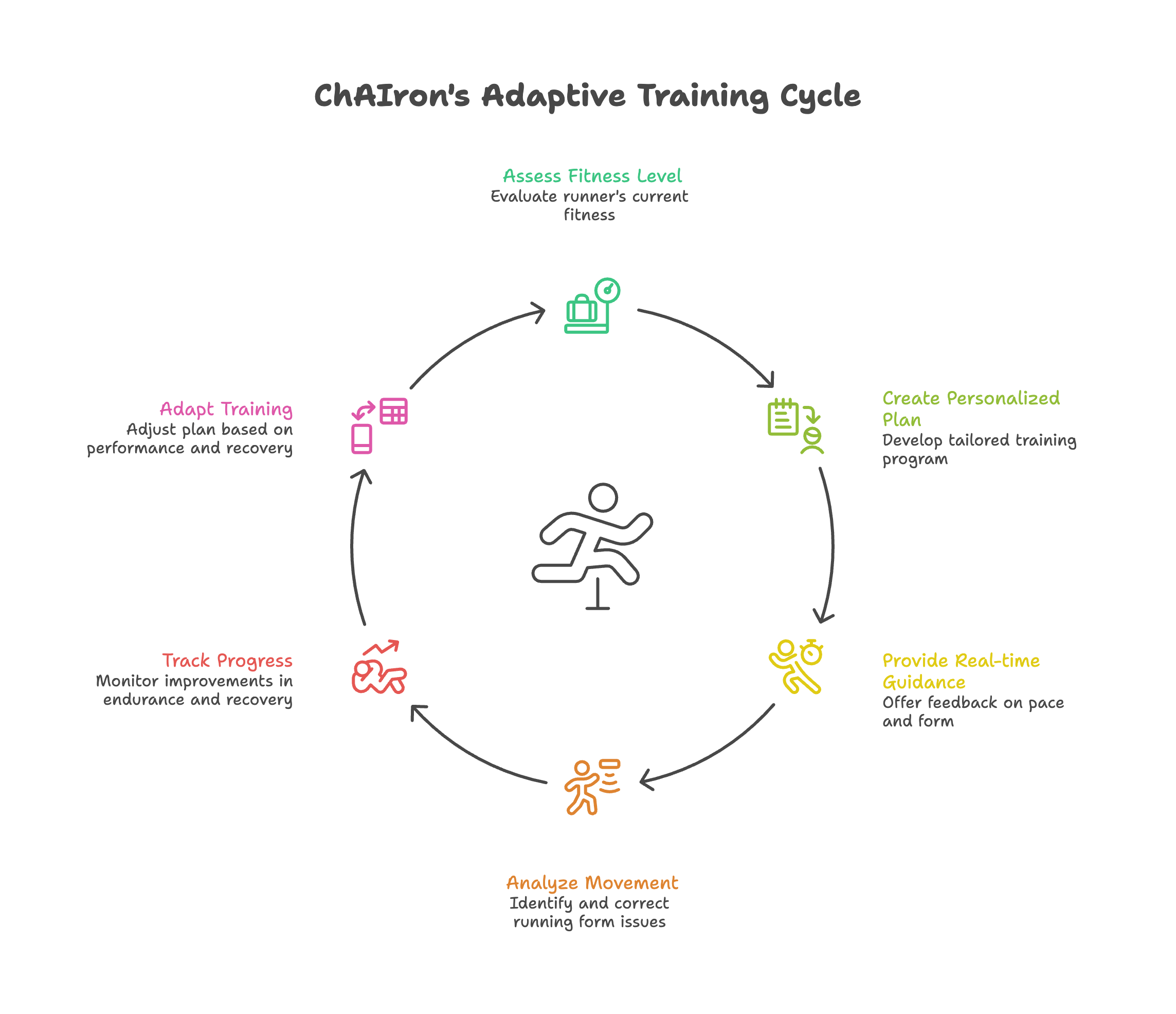
ChAIron's AI-powered coaching takes the guesswork out of starting to run. Think of it as your personal running coach that adapts to your needs.
Unlike generic apps like Nike Run Club that offer preset training plans, ChAIron adapts your running program in real-time based on how you're actually performing and recovering.
A: 2-3 times per week with at least one rest day between runs. This frequency gives your body time to adapt without overtraining. As you build your fitness level over weeks, you can gradually increase to 4-5 times per week if desired.
A: No. Focus on fit and comfort, not brand or price, when choosing your running shoes. Many running stores offer last season's models at 30-50% of,f which work just as well. The most important thing is finding the right running shoe for your foot type and gait.
A: Start with time and feel. Consistency and comfort matter more than speed or distance early on in your running journey. Celebrate milestones like your first 10 minutes of continuous running, your first week of completing all planned workouts, or when running starts feeling easier.
A: Start with 30-second run intervals and 2-3 minute walk breaks. Everyone starts somewhere. Some beginning runners start with just 20-second run intervals. There's no shame in starting small; what matters is starting and staying consistent.
A: Run-walk intervals are the safest and most effective way for beginners to start running. They build endurance while reducing the risk of running injuries. Even experienced runners use run walk intervals when returning from breaks or building to longer runs.
A: For beginners in weeks 1-4, your longest run is only 20-25 minutes total (including walk breaks). As you progress toward a 5k race, your long run might build to 30-40 minutes. The key is gradual progression; increase your longest run by no more than 10% each week.
A: Yes. Even beginning runners benefit from strength training and cross training. Strength training 1-2 times per week strengthens the muscles and connective tissue that support running, reducing the risk of running injuries. Cross training (cycling, swimming, walking) keeps you active on rest days without additional impact stress.
A: Both work. Treadmill running offers controlled conditions and a consistent pace, which some new runners prefer. Outdoor running offers varied terrain, fresh air, and a better simulation of race-day conditions. Many runners do both, treadmill running for midweek workouts, and outdoor runs on weekends.
A: Hold off on structured hill workouts until you can run continuously for 20-30 minutes. Once you've built that base, gentle hill workouts (short hill repeats or hilly routes) build strength and power. Your training program should introduce hills gradually, not in the first few weeks.
A: Join a running group for social accountability, set small achievable goals (like completing this week's training plan), remember your "why" (health, stress relief, proving you can), and track visible progress. Many runners find that apps, running groups, or a running coach help maintain running motivation when willpower dips.
A: Nike Run Club offers solid preset training plans and guided runs, making it a decent free option for beginner runners. However, it doesn't adapt to your individual recovery or provide real-time running form feedback as ChAIron does. For beginners who want adaptive coaching rather than static plans, ChAIron offers more personalized guidance.
Your running routine should feel sustainable, not exhausting. Start with 3 days per week, gradually adding more as your fitness level improves over the months. Consistency beats intensity for beginners.
If you're training for a 5k race or another race-day goal, give yourself 8-12 weeks of base building before race-specific training. Your first 5k race isn't about speed; it's about experiencing the joy of completing something you couldn't do before.
A running group provides accountability, running motivation, and social connection. Many local running stores host free weekly runs for all fitness levels. Training alongside other runners makes the process more enjoyable.
Your running journey isn't linear. Some days feel easy. Others feel it is impossible. Both are normal. What matters is showing up consistently, listening to your body, and trusting the process.
If you're standing at the starting line feeling nervous, here's what you need to hear: You don't need to be fast. You don't need to run far. You just need to start.
The first few runs will feel hard. But if you stick with it, if you follow a training plan, build gradually, and stay consistent, something shifts. Week 3, running feels easier. Week 5, you hit a milestone. Week 8, you actually look forward to your runs.
That's when running stops being something you're "trying" to do and becomes something you just do. That's when you go from beginning runner to simply runner.
ChAIron's AI-powered coaching adapts to your fitness level, pace, and progress. Get personalized training plans, real-time feedback on pacing and running form, and running injury prevention guidance that adjusts based on how you're performing.
Whether you're aiming for your first 10 minutes of continuous running, training for a 5k race, or building endurance for longer runs, ChAIron acts as your personal running coach, guiding every step of your running journey.
Let's build your running journey, one step at a time.
.png)
.png)