January 19, 2026

You finished your long run. Your legs are heavy. Your muscles ache. Tomorrow's easy run feels impossible, and you're wondering if this constant soreness is just part of being a runner.
Here's the truth: recovery after running isn't optional. It's where your body actually gets stronger. Training breaks down muscle fibers. Recovery rebuilds them. Skip proper recovery, and you're not getting fitter, you're getting injured.
Most runners focus obsessively on training plans but treat recovery as an afterthought. They push through sore muscles, skip rest days, and wonder why their race day performance never improves. Or worse, they end up with overuse injuries that sideline them for weeks.
This guide breaks down exactly how running recovery works, what your body needs after different types of runs, and the recovery strategies that actually speed up muscle repair without cutting into your training.
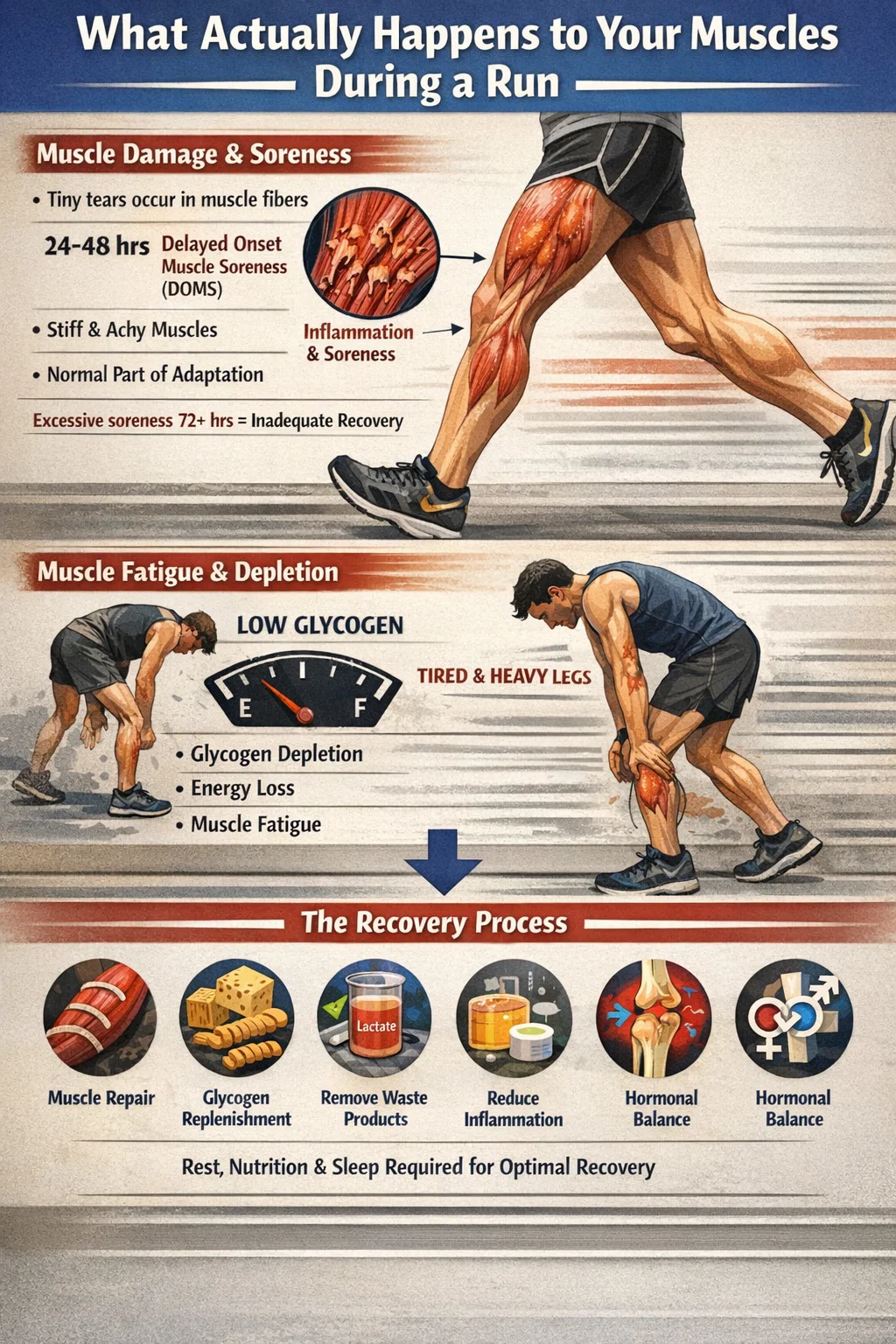
Every time you run, you create microscopic damage to muscle fibers. This is normal and necessary for adaptation. But understanding what's happening helps you recover smarter.
When you run, especially hard workouts or long runs, you create tiny tears in muscle fibers. This muscle damage triggers inflammation and the muscle repair process. Within 24-48 hours, you experience delayed onset muscle soreness (DOMS): that stiff, achy feeling that makes stairs your enemy.
Delayed onset muscle soreness isn't a sign you did something wrong. It's a sign your body is adapting. But excessive soreness that lasts more than 72 hours or prevents normal movement signals inadequate recovery.
During runs, your muscles burn through glycogen (stored carbohydrate energy). Long runs and marathon training can deplete glycogen stores completely, leaving tired muscles that feel weak and heavy. Without refueling, your recovery time extends significantly.
Recovery is when your body:
This recovery process requires time, nutrition, sleep, and sometimes active recovery to circulate blood without adding stress.
The cool down is your first recovery step. Never stop abruptly after a hard effort.
Effective cool-down structure:
Why it matters: Stopping suddenly can cause blood to pool in your legs, increasing soreness and muscle fatigue. A proper cool down jumpstarts the recovery process.
Your post run recovery window is 30-60 minutes after finishing. This is when your body is most receptive to nutrients for muscle repair and glycogen replenishment.
Post-run nutrition priorities:
For long runs or races: Aim for a 3:1 or 4:1 carb-to-protein ratio to maximize glycogen storage and muscle repair.
Why it matters: Damaged muscles need protein to rebuild. Depleted glycogen stores need carbs. Skip this and your recovery time doubles.
Sleep is when most muscle repair happens. Growth hormone peaks during deep sleep, driving tissue regeneration.
Sleep targets for runners:
Signs of inadequate sleep affecting recovery:
Passive recovery means complete rest, no running, no intense exercise. This is critical after hard workouts, long runs, and races.
Active recovery means low-intensity movement that increases blood flow without adding training stress:
When to use each:
Why it matters: Active recovery increases blood flow to tired muscles, speeding nutrient delivery and waste removal. But pushing too hard turns "recovery" into another training stress.
Rest days are when adaptation actually happens. Your body doesn't get stronger during the run; it gets stronger during rest.
How many rest days do you need?
What counts as a rest day:
Why it matters: Chronic under-recovery leads to overuse injuries, stress fractures, tendonitis, IT band syndrome. Rest days prevent this.
Not all runs require the same recovery. Here's how to structure post-run recovery based on what you did.
What it is: Conversational pace, short-to-moderate distance (3-6 miles)
Recovery needs:
Recovery time: 12-24 hours
What it is: High-intensity efforts, track workouts, threshold runs
Recovery needs:
Recovery time: 48-72 hours before next hard effort
What it is: Weekly mileage peak (10-20+ miles depending on training level)
Recovery needs:
Recovery time: 24-48 hours before easy run, 72+ hours before hard workout
Race day pushes your body to limits regular training doesn't. Post race recovery requires more than a few rest days.
Immediate (0-2 hours):
Rest of the day:
Full recovery time: 1-2 weeks before resuming normal training
Full recovery time: 3-4 weeks before resuming marathon training intensity
Why it matters: Marathon runners who jump back into training too quickly develop overuse injuries. Your body needs time to repair the significant muscle damage from 26.2 miles.
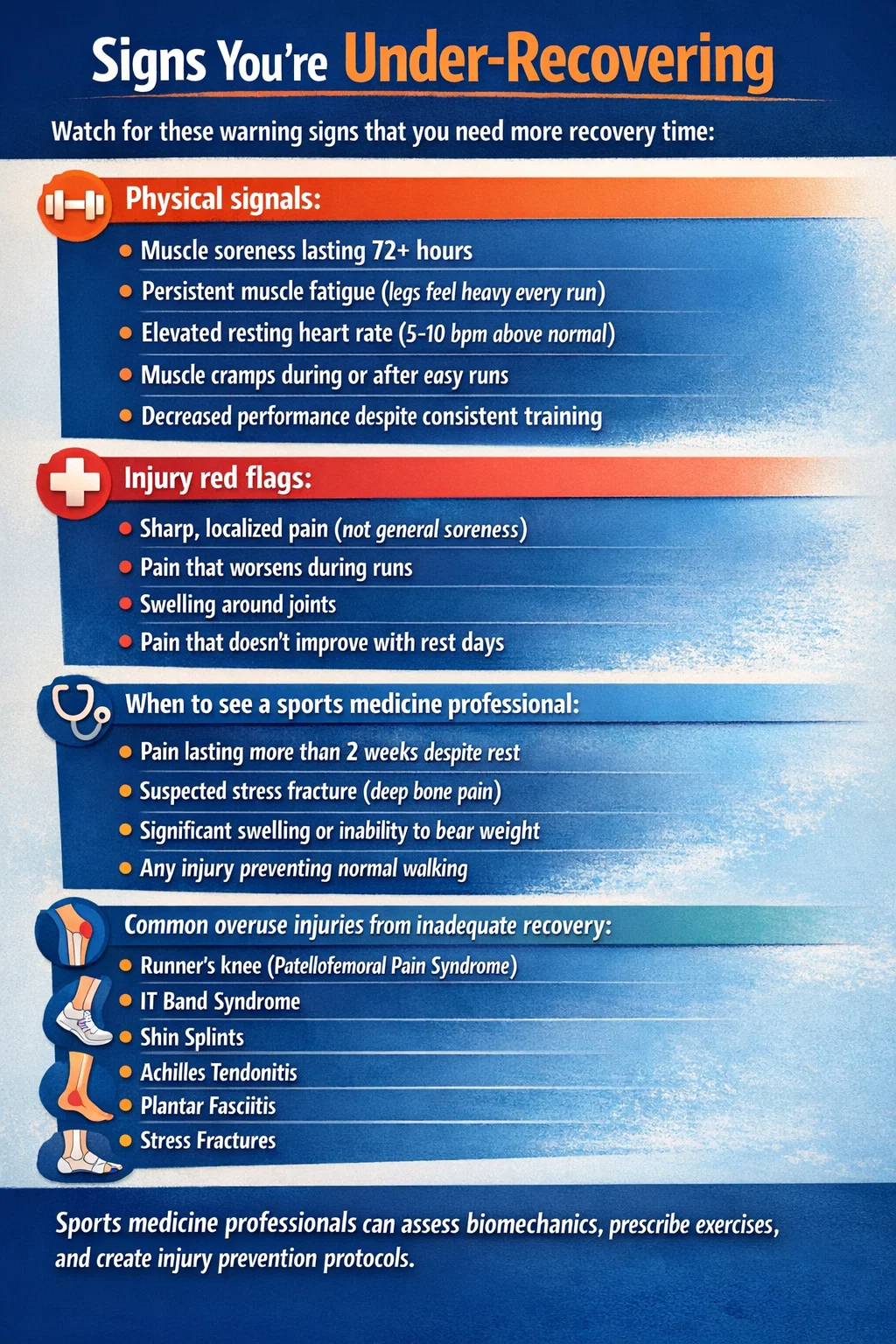
Watch for these warning signs that you need more recovery time:
Physical signals:
Injury red flags:
When to see a sports medicine professional:
Common overuse injuries from inadequate recovery:
Sports medicine professionals can assess biomechanics, prescribe knee exercises or strength work, and create injury prevention protocols.
ChAIron's AI coaching doesn't just plan your runs, it plans your recovery too.
1. How long should I rest after a run?
For easy runs, most runners can train again within 12–24 hours. After hard workouts or long runs, allow 48–72 hours before your next intense session. After a half or full marathon, full recovery can take 1–4 weeks depending on your fitness and training history.
2. What’s the fastest way to reduce muscle soreness after running?
Start with a proper cool-down, hydrate well, and eat a mix of carbohydrates and protein within 30–60 minutes. Light walking or an easy recovery run the next day can also increase blood flow and help soreness fade faster.
3. Is it better to rest or do active recovery?
Both matter. Complete rest is best after races and very hard workouts. Active recovery, like easy jogging, walking, or cycling, works well after moderate runs because it improves circulation without adding stress.
4. How can I tell if I’m under-recovering?
Common signs include muscle soreness lasting more than 72 hours, heavy legs on every run, declining performance, and an elevated resting heart rate. Sharp or localized pain may indicate an overuse injury and should be checked by a professional.
5. How does nutrition affect running recovery?
Carbohydrates replenish depleted energy stores, while protein repairs damaged muscle fibers. Eating both soon after your run helps reduce recovery time and prepares your body for the next workout.
.png)
.png)