January 21, 2026
You finish a long run. Your legs are heavy, your shirt is drenched in sweat, and you're standing in front of the fridge wondering: What should I actually drink right now?
Water feels too simple.
Sports drinks seem like overkill for an easy run.
You've heard chocolate milk is good, but is that just bro-science?
And what about coconut water, tart cherry juice, or those fancy recovery mixes like Tailwind Recovery Mix?
Here's the truth: the best recovery drink after running depends on what kind of run you just did. An easy 3-miler needs different recovery nutrition than a 20-mile long run or a brutal track workout. Your body's needs for carbohydrate, protein, and electrolytes change based on intensity and duration.
This guide breaks down exactly what your body needs for optimal recovery, compares the most popular recovery drink options backed by sports nutrition science, and shows you how to match your post run recovery drink to your training.
Every run depletes resources your body needs to recover. Understanding what happens during exercise helps you choose the right recovery drinks.
When you run, your muscles burn through glycogen, stored carbohydrate energy. Easy runs use some glycogen. Long runs and intense workouts can deplete stores almost completely. Without refueling carbs post-run, your recovery process slows dramatically.
Sports nutrition research shows the post workout recovery window is 30-60 minutes after finishing. This is when your body is most receptive to replenishing glycogen stores.
Running creates microscopic tears in muscle fibers, especially during long runs, hills, or speed work. This muscle damage triggers muscle soreness and requires protein for muscle repair.
Endurance athletes need protein alongside carbs for optimal recovery. The ideal ratio is 3:1 or 4:1 carbs to protein for post workout recovery drinks.
You lose water and electrolytes (sodium, potassium, magnesium) through sweat during exercise. Inadequate rehydration extends recovery time, increases fatigue, and can trigger muscle cramps.
Sports medicine guidelines recommend drinking 16-24 oz of fluid per pound lost during exercise. For intense exercise or hot weather runs, you need electrolyte drinks, not just water, for proper recovery.
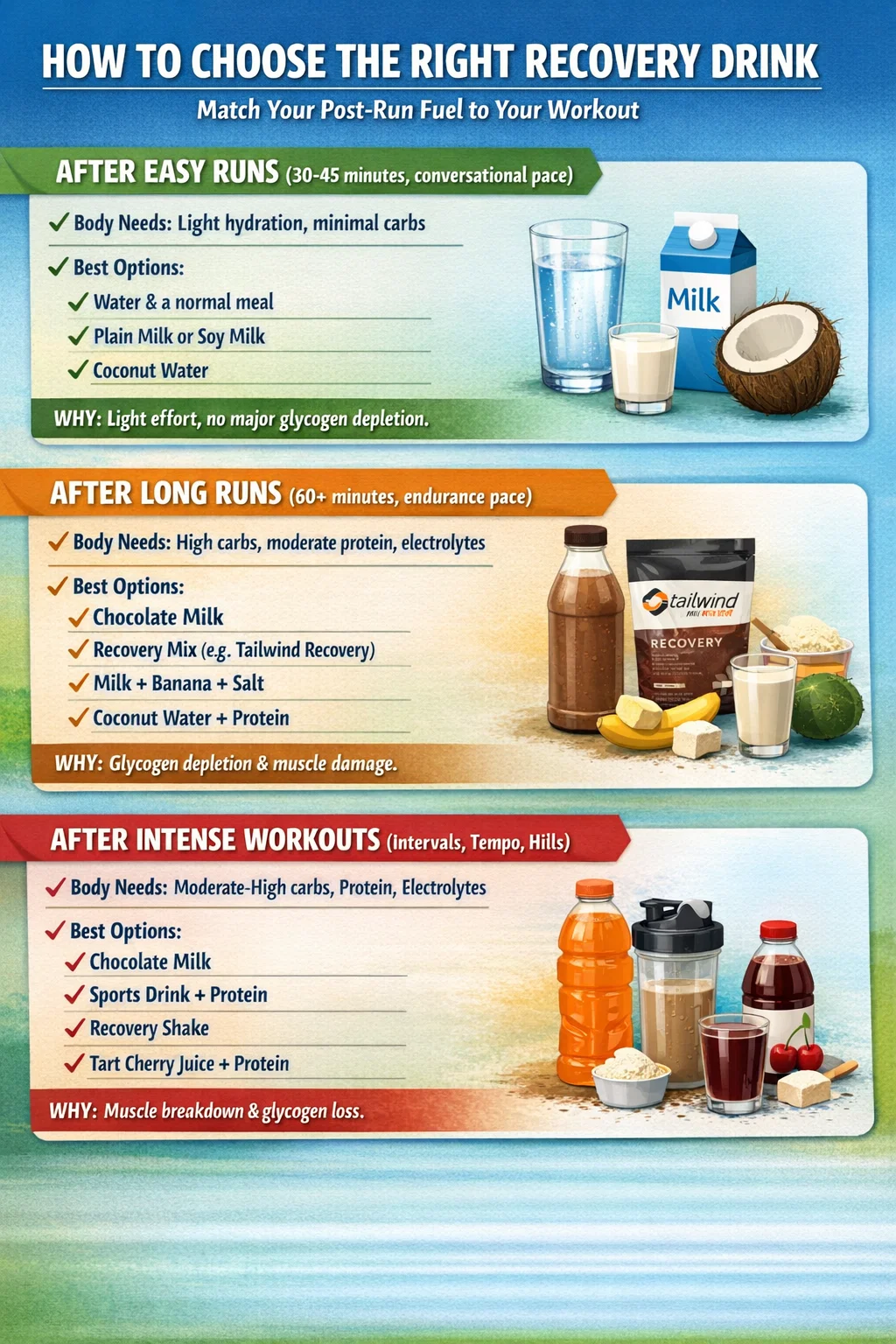
Not every run requires a specialized recovery drink. Here's how to match your post run recovery drink to your workout.
What your body needs: Light hydration, minimal carbs
Best options:
Why: Easy runs don't deplete glycogen significantly or cause major muscle damage. You don't need a heavy recovery shake here.
What your body needs: High carbs (50-80g), moderate protein (15-20g), electrolytes, rehydration
Best options:
Why: Long runs deplete glycogen and cause muscle damage. You need significant carbohydrate and protein for muscle recovery and muscle repair.
What your body needs: Moderate-high carbs (30-60g), protein (15-25g), electrolytes
Best options:
Why: Intense workouts create significant muscle damage and glycogen depletion. Fast recovery nutrition speeds muscle repair and reduces muscle soreness.
Chocolate milk is the darling of sports nutrition research for runners. Multiple studies show it's as effective as commercial sports drinks for post workout recovery.
What it provides:
Pros:
Cons:
Alternatives: Soy milk provides similar recovery nutrition for dairy-free athletes. Plain milk or regular milk works too, though chocolate milk provides more carbs for glycogen replenishment.
Best for: Long runs, intense workouts, endurance exercise where glycogen depletion is significant.
Sports drinks (Gatorade, Powerade, Nuun) provide carbs and electrolytes but typically lack protein.
What they provide:
Pros:
Cons:
Best for: Hydration during and immediately after runs, especially in heat. Pair with a protein source for complete post run recovery.
Coconut water is marketed as "nature's sports drink" for its electrolyte content.
What it provides:
Pros:
Cons:
Best for: Easy runs where you want light electrolytes without heavy calories. Not sufficient alone after long runs or intense exercise.
Tart cherry juice has gained attention in sports nutrition for its anti-inflammatory properties and potential to reduce muscle soreness.
What it provides:
Pros:
Cons:
Best for: Post workout recovery when combined with protein. Some runners drink it before bed after hard workouts to reduce next-day soreness.
Green tea contains antioxidants (catechins) that may support recovery by reducing inflammation.
What it provides:
Pros:
Cons:
Best for: Supplementing recovery nutrition, not replacing it. Drink alongside a proper recovery shake or meal.
Products like Tailwind Recovery Mix and other recovery mixes are formulated specifically for endurance athletes.
What they provide:
Pros:
Cons:
Best for: Runners who want optimized recovery nutrition without refrigeration. Ideal for post-race or when whole foods aren't accessible.
Whole-food options:
Pros: Natural, cost-effective, whole food nutrients
Cons: Requires prep, less portable
Commercial options:
Pros: Convenient, precisely formulated, portable
Cons: More expensive, may contain additives
ChAIron's verdict: Both work. Choose based on convenience, budget, and preference. Chocolate milk and soy milk are backed by as much research as expensive recovery mixes.
After easy runs:
After long runs:
After intense workouts:
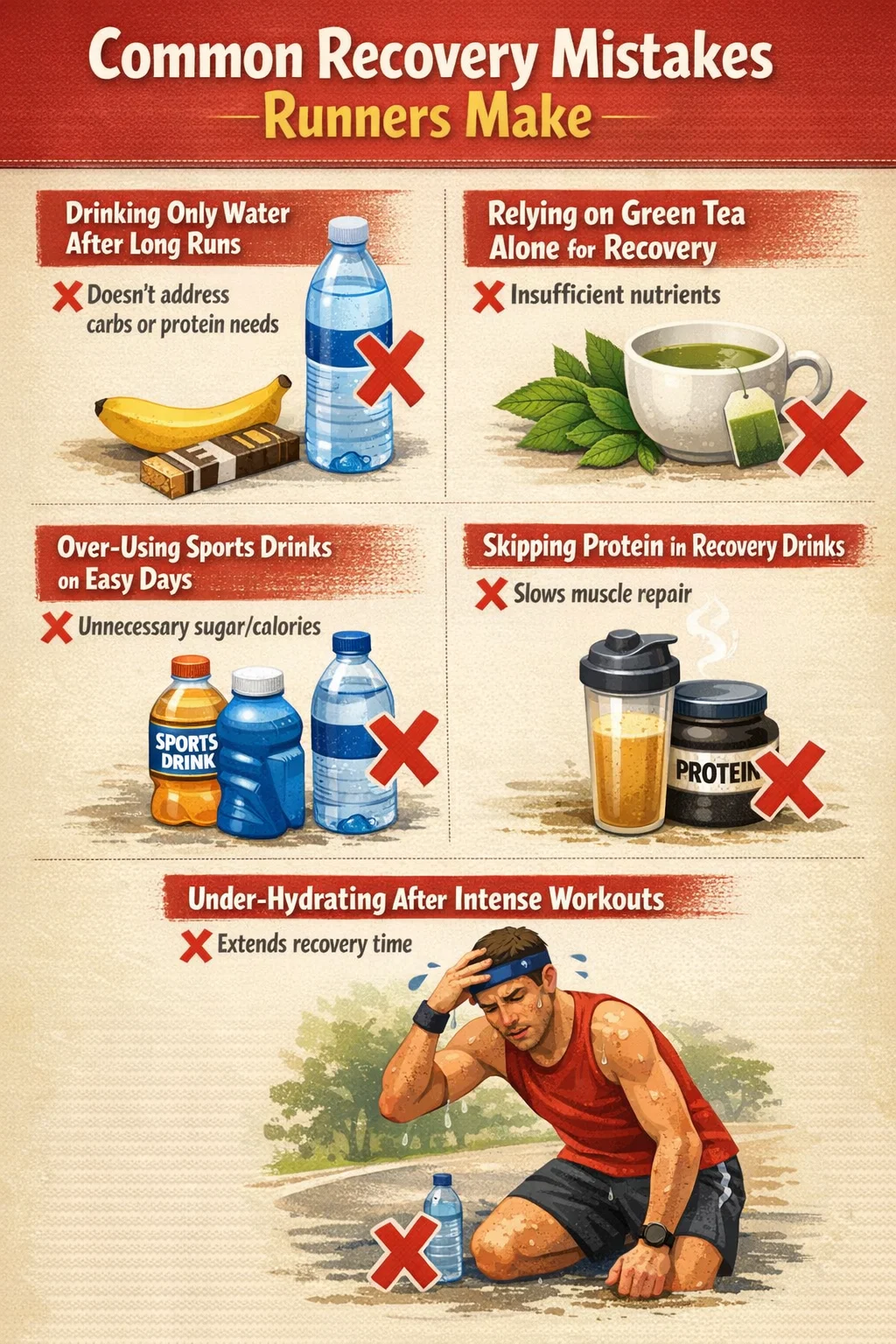
❌ Drinking only water after long runs (doesn't address carbs or protein needs)
❌ Relying on green tea alone for recovery (insufficient nutrients)
❌ Over-using sports drinks on easy days (unnecessary sugar/calories)
❌ Skipping protein in recovery drinks (slows muscle repair)
❌ Under-hydrating after intense workouts (extends recovery time)
ChAIron doesn't just plan your runs, it guides your recovery nutrition too.
Post-run recovery recommendations: After every workout, ChAIron provides personalized recovery drink suggestions based on run intensity, duration, and sweat loss. Easy run? You'll get simple hydration guidance. Long run? The app recommends high-carb options like chocolate milk or recovery mixes.
Timing reminders: ChAIron reminds you to refuel within the 30-60 minute recovery window when your body is most receptive to nutrients for muscle recovery.
Hydration tracking: The app monitors your rehydration needs based on effort, temperature, and individual sweat rate, ensuring proper recovery and optimal performance in your next workout.
Train smarter, recover faster, and fuel your body right with AI coaching that adapts to your training.
.png)
.png)