
January 7, 2026

The back and bicep workout builds a powerful, V-tapered upper body with functional strength. This guide covers 8 essential exercises using ChAIron's exercise library, combining vertical pulls, horizontal rows, and unilateral movements that target every angle of your back while maximizing bicep development.
But here's what separates results from plateaus: Most people do the same back and bicep routine every week, with the same weights, same reps, regardless of whether they're fatigued or fresh. Your actual readiness changes daily. Your form degrades under fatigue. Your joints rebel at high volume when recovery is compromised.
This guide shows you the science-backed exercises with exact technique cues. And then something more important: how to know when to scale, when to push, and when to hold back based on your actual capacity, not a generic program.
.png)
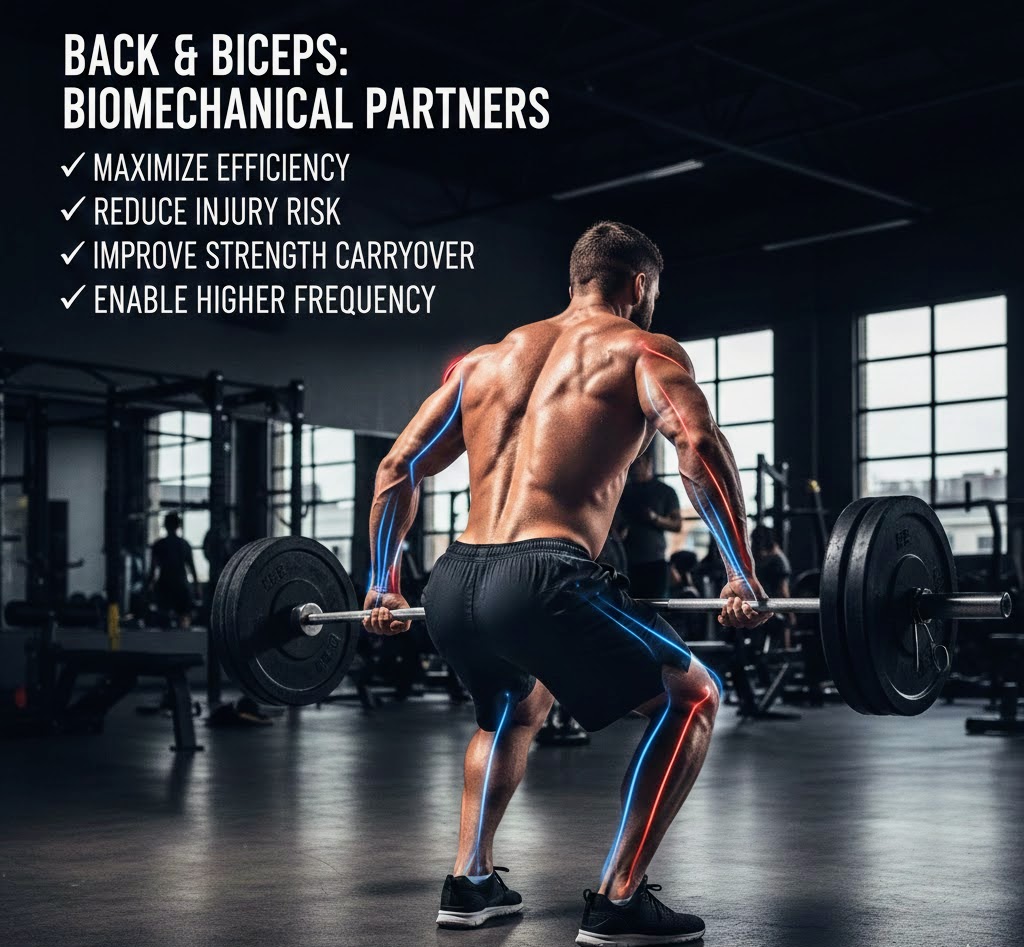
Back and biceps are biomechanical partners. Nearly every back-pulling movement (rows, pull-ups, pulldowns) recruits the biceps as a secondary mover.
By pairing them strategically, you:
✓ Maximize efficiency: Train two large muscle groups in one session while respecting CNS recovery
✓ Reduce overuse injury risk: Biceps aren't pre-exhausted before back work begins
✓ Improve strength carryover: Heavy back compounds improve your pulling capacity, which amplifies bicep exercises
✓ Enable higher frequency: You can train back/biceps 1-2x per week without compromising other sessions
Equipment You'll Need
Gym required? Yes, this workout is most effective with cable machines and weighted equipment. If training at home, resistance bands can substitute for most movements.
This workout uses 4 sets of 15 reps per exercise across 8 movements with a superset option:
Option 1 (Beginners): 90-120 second rest between all sets. Focus on form and muscle connection.
Option 2 (Intermediate/Advanced): Alternate between pull exercises → curl exercises with no rest (supersets).
Finish the superset pairing, then take 2-3 minutes before the next superset. This demands more from your cardiovascular system and CNS.

Dynamic stretching (shoulder dislocations, band pull-aparts)
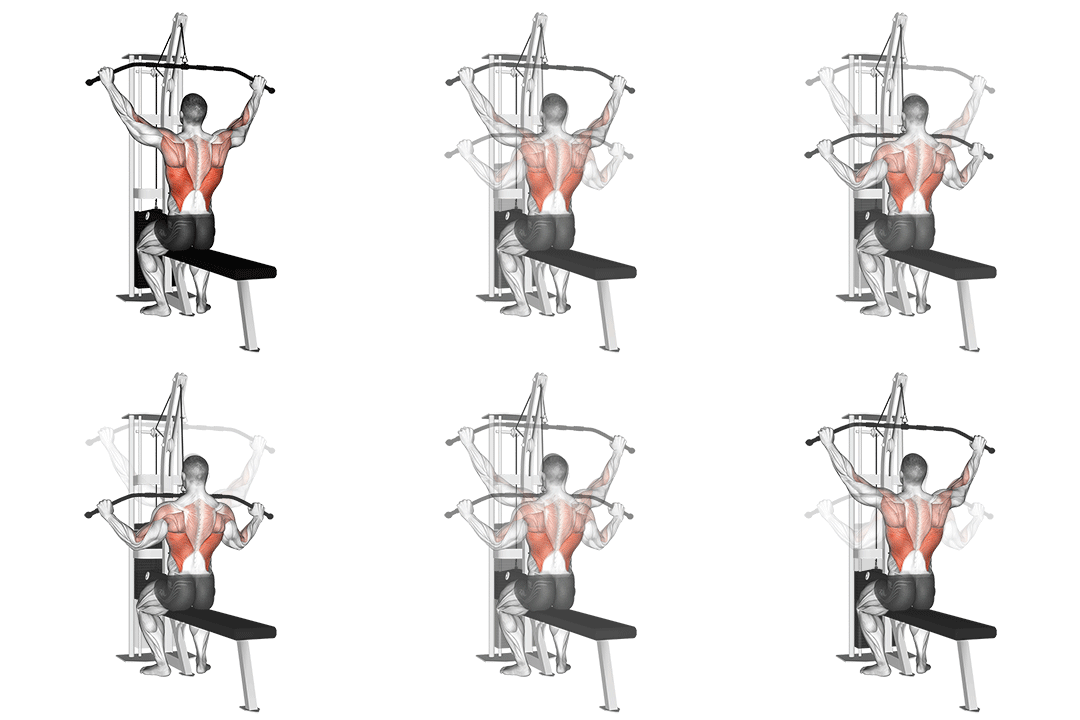
Why This First? Heavy vertical pulling wakes up your lats and central nervous system. You're fresh, so you can move heavier weight with better control. This mirrors the Pull-Up movement pattern but with adjustable loading.
Setup:
Execution:
Key Cues:
ChAIron Form Coaching: ChAIron's AI monitors your lats engagement, elbow path, and whether you're using momentum vs. pure muscle strength. Real-time feedback corrects form breaks before they become injuries.
If you feel that your form is incorrect, you can check out our lat pulldown guide
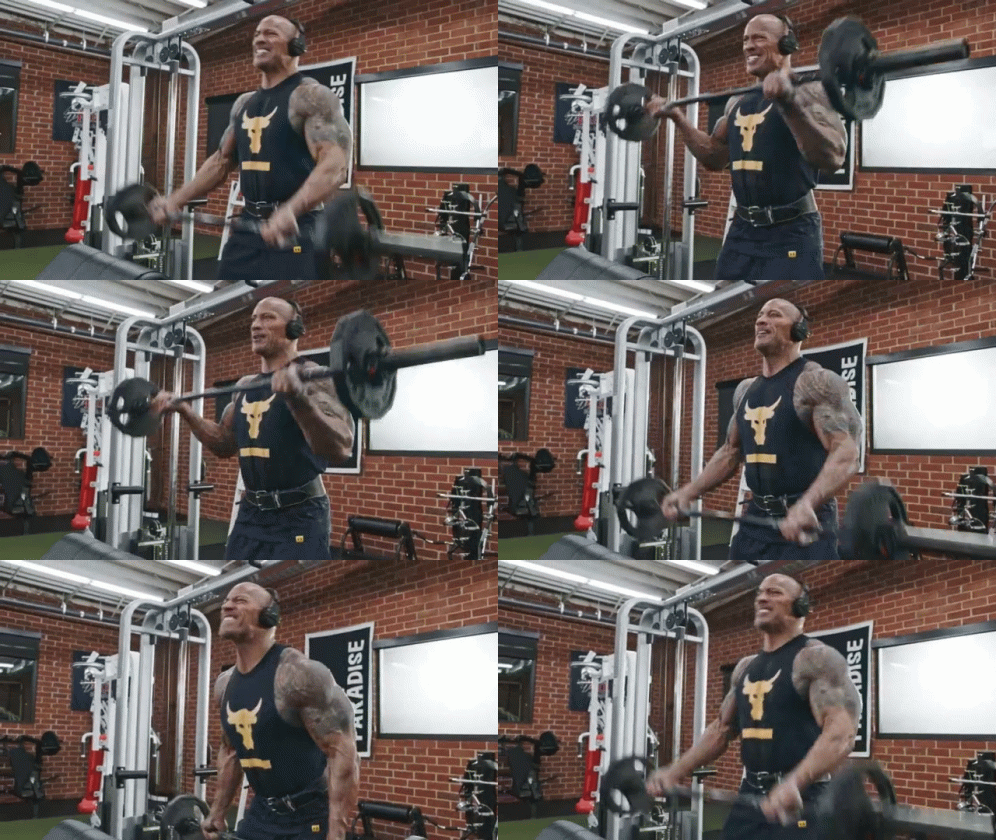
Why Barbell Curl? The barbell allows you to load more weight than dumbbells on fresh biceps, building raw strength. The straight bar is more stable, letting you focus on the pump rather than balance.
Setup:
Execution:
Key Cues:
ChAIron Form Coaching: ChAIron's AI detects elbow drift, swinging motions, and incomplete range of motion. It flags when your form breaks and suggests reducing weight before injury occurs.
You can checkout our Barbell Curl guide to learn more about the perfect technique.
.gif)
Why Unilateral? Single-arm work catches strength imbalances (one side stronger than the other), forces more lat activation per arm, and increases overall muscle recruitment. You also train core stability and anti-rotation strength.
Setup:
Execution:
Key Cues:
ChAIron Form Coaching: ChAIron monitors spinal rotation, lat activation, and whether you're using your arms instead of your back. It gives real-time cues to lock in your core and drive the elbow back.
Want to learn how to do dumbbell row properly? Checkout our free dumbbell row guide here
.gif)
Why Hammer Curls? Neutral grip (palms facing each other) targets the brachialis, which sits under the biceps and pushes them up for better peak. Also builds forearm and grip strength, critical for functional fitness and injury prevention.'
Setup:
Execution:
Key Cues:
ChAIron Form Coaching: ChAIron's camera detects upper arm movement and flags when you're using momentum. It also measures elbow bend consistency across all reps.
For more details on how to do hammer curls properly, you can read our complete hammer curl guide here
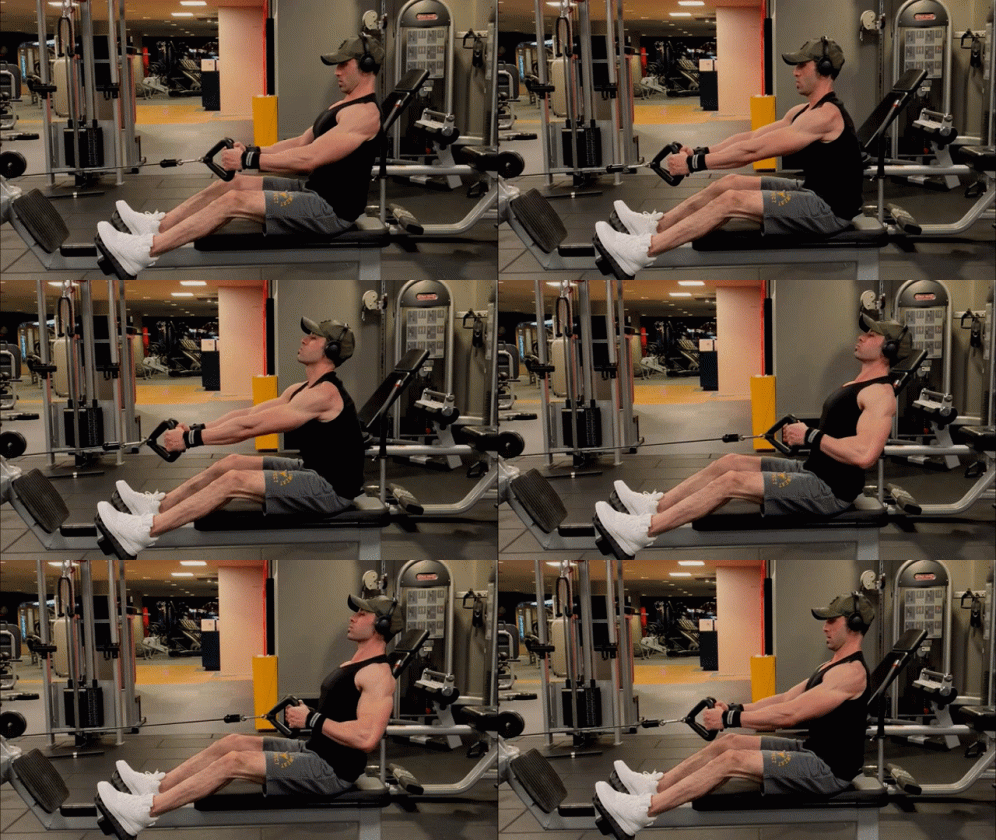
Why Here? After high pulls, your lats are activated. Seated rows hit the lower back and lower lats from a different angle, adding completeness. The seated position eliminates momentum, forcing pure back strength.
Setup:
Execution:
Key Cues:
ChAIron Form Coaching: ChAIron monitors scapular retraction, lower back position, and whether your elbows are driving the movement. It flags excessive forward lean or incomplete range of motion.
If you are a newbie gym user and unsure of your technique, do read our simple seated row guide.

Why Preacher Curls? The preacher bench eliminates momentum entirely. Your biceps cannot hide. The bench angle (usually 45-60 degrees) creates a unique stretch at the bottom and intense contraction at the top. By exercise 6, your biceps are fatigued, this forces true muscle contraction.
Setup:
Execution:
Key Cues:
ChAIron Form Coaching: ChAIron ensures you're not letting the weight drop and that you're maintaining full range of motion. It also catches if you're pressing through your chest instead of curling purely with your biceps.
If you want to learn the proper way for doing preacher curl, you can read our complete preacher curl guide
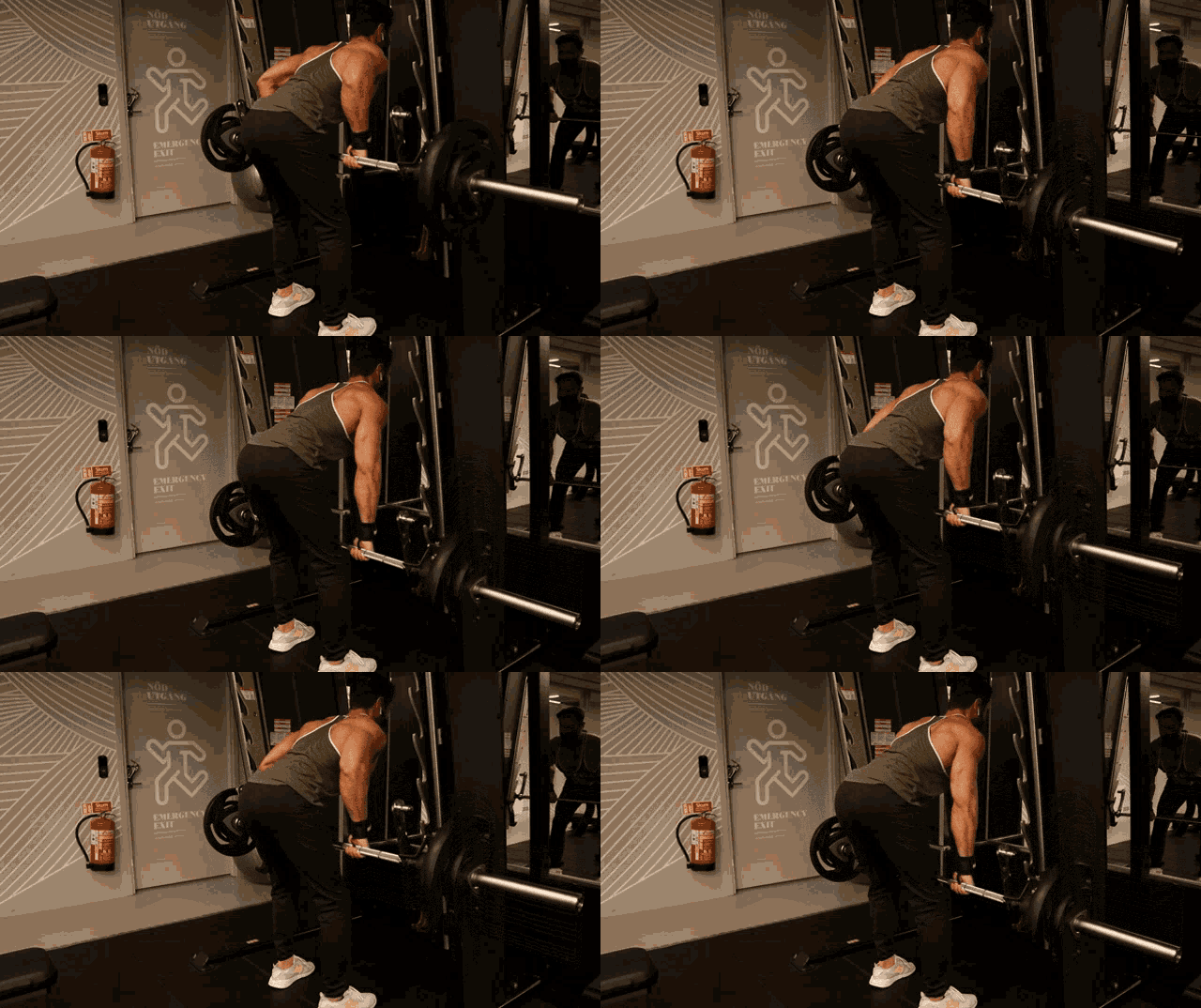
Why Here (Second Heavy Compound)?
By exercise 7, your back is fatigued but not destroyed. A heavy bent-over row at this point drives significant muscle damage. You're targeting the middle back and lats with raw pulling strength. This is one of the best back-building movements in existence.
Setup:
Execution:
Key Cues:
ChAIron Form Coaching: ChAIron's AI detects lower back rounding, excessive forward lean, and incomplete range of motion. It warns before form breaks lead to injury.
Want to learn the perfect way to do barbell bent-over rows? Do read our complete guide here
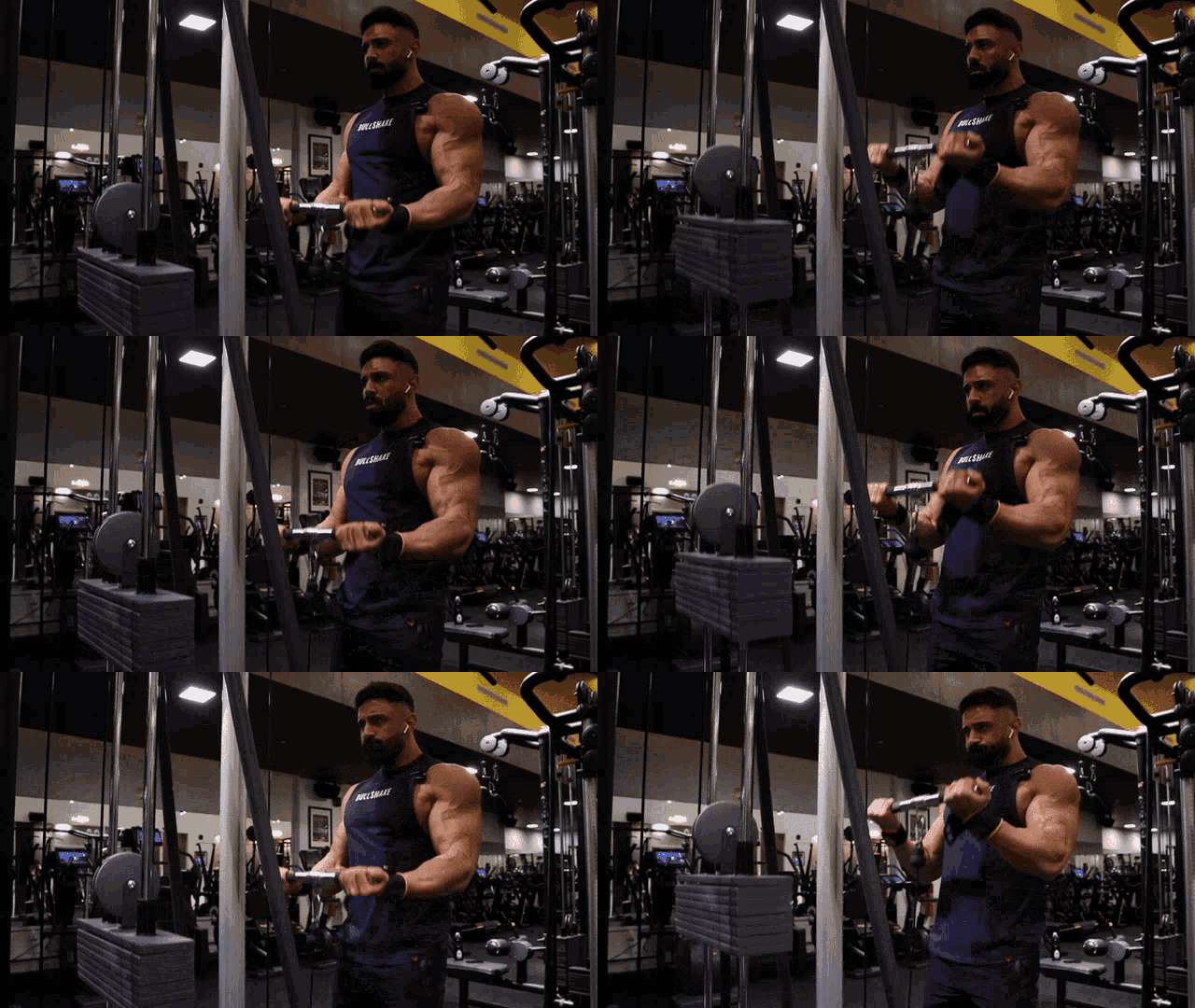
Why Cable Curls as Finisher? By exercise 8, your back and biceps are deeply fatigued. Cable curls provide constant tension throughout the movement, there's no "easy" part like there is with dumbbells at full extension. This creates maximum pump and metabolic stress on exhausted biceps.
Setup:
Execution:
Key Cues:
ChAIron Form Coaching: ChAIron catches cheating early, swaying, using momentum, incomplete range of motion. It keeps you honest during the final exercise when fatigue tempts you into bad form.
If you want to master cable biceps curl, do read our complete cable biceps curl guide
Training with ChAIron makes this back and bicep workout behave like real coaching, not just a list of exercises. It connects the exact routine you are running to your form, fatigue, and recovery so you get better pulls and curls without wrecking your joints over time.
ChAIron treats each of these 8 back and bicep exercises as a skill, not just a movement you survive for 4 sets of 15. The camera checks joint angles, bar paths, tempo, and torso position so you are not guessing whether your lat pulldown, rows, or curls “look okay” when fatigue hits in sets 3 and 4.
Instead of forcing the same volume every session, ChAIron adapts your workload to how recovered you are that day, using performance trends and wearable data to nudge you up or down in load, rest, and volume when needed. Over time, that means more high‑quality pulling volume, fewer junk reps, and better carryover into your other sessions (push, legs, or hybrid conditioning)
ChAIron also centralizes your hybrid training: whether you are chasing a stronger V‑taper, prepping for HYROX, or mixing strength with conditioning, it keeps back and bicep work aligned with the rest of your week instead of letting “arm day” float randomly. You get the feeling of a technical coach who remembers last week’s numbers, not a static program that forgets everything you have already done.
1. Do you need ChAIron to follow this back and bicep workout?
No, you can run the exact 8‑exercise structure without the app, but ChAIron helps you pick smarter loads, spot form
breakdowns, and adjust volume so you are less likely to stall or get hurt.
2. How does ChAIron improve my form on back and bicep days?
ChAIron uses camera‑based tracking to monitor things like elbow path on rows, torso lean on pulldowns, and swinging on curls, then gives real‑time cues to correct you rep by rep.
3. Will ChAIron change this routine based on my goals?
Yes, it can bias the same movement pattern toward more hypertrophy, strength‑endurance, or maintenance by adjusting sets, reps, tempo, and weekly frequency around your broader training plan.
4. Can ChAIron sync my back and bicep training with my wearables?
ChAIron integrates with devices like Apple Health, Google Fit, Garmin, and Fitbit to pull in heart rate and recovery signals, then uses those trends to guide how hard you should push in a given session.
5. Who is ChAIron best suited for with this workout?
It is ideal if you already care about technique, want measurable progress on your pulls and curls, and like the idea of a data‑driven “virtual coach” that keeps your upper‑body training in sync with the rest of your week.
This back and bicep workout will work on its own, but it works much better when something is watching how you move and how you recover. ChAIron gives you that layer of real‑time form feedback and adaptive programming, so every pulldown, row, and curl actually builds the strong, V‑tapered upper body you are training for, instead of just burning you out.
Your readiness changes every session: energy, recovery, and stress all shift. This back and bicep workout shows you when to push heavy compounds, when to scale volume, and how ChAIron adjusts technique cues in real time so your pull day matches your actual capacity, not a rigid template.
.png)
.png)