January 12, 2026

Building a solid chest doesn't require fancy equipment. Dumbbells let you hit every angle at home or in the gym. They give you full range of motion and help fix imbalances that barbells often miss. If you're aiming for strength in HYROX pushes or just want more size, this guide walks you through the exercises and routines that work. At ChAIron, our experts tested these workouts and their efficiency over months, and they deliver real progress when done consistently.
So, these 7 exercises are the best dumbbell chest workouts you would ever need and the best part is you can do these at gym or at home or at anywhere you need!
Dumbbells force each side of your body to work independently. This builds balanced strength and avoids letting one side dominate. They also allow natural movement paths, which reduces joint stress compared to fixed bars. For HYROX athletes, this translates to better pressing power during wall balls or sled pushes. Plus, they're versatile for home setups with no bench required.
Focus on these to target the full chest. Start with compound moves for strength, then add isolation for size. Aim for controlled reps to maximize muscle engagement.
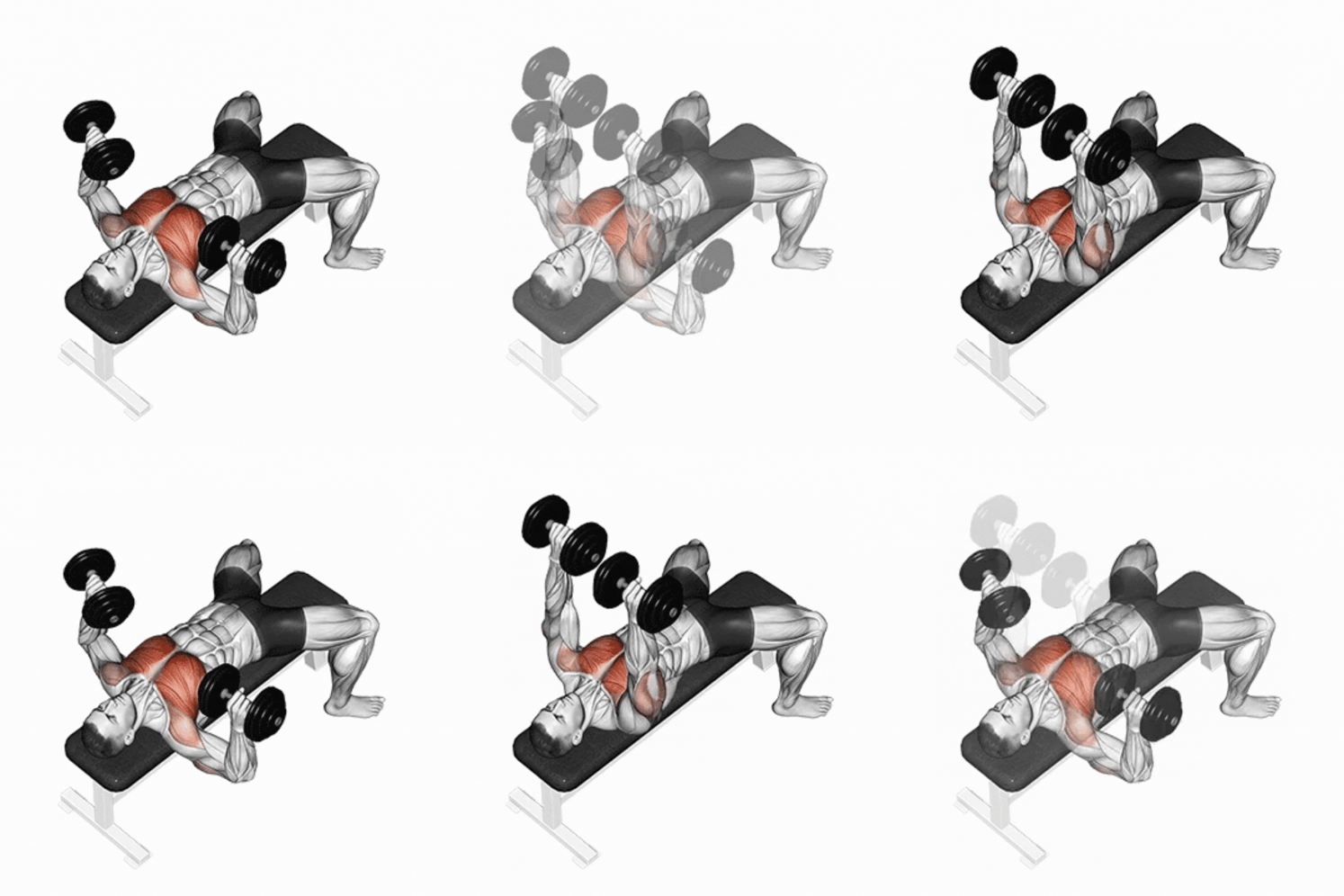
The flat dumbbell bench press is a staple compound chest move that builds overall pressing strength across your pecs, shoulders, and triceps. It gives you a freer range of motion than a barbell, helping you develop balanced strength and control on each side.
Lie back on a flat bench with a dumbbell in each hand, feet planted and shoulder blades squeezed back. Start with the dumbbells above your chest, palms facing forward or slightly turned in. Lower them slowly in a controlled arc until your elbows are around 90 degrees, then press back up until your arms are nearly straight, keeping the weights stacked over your chest the whole time.
Because each arm moves independently, the flat dumbbell bench press helps fix strength imbalances while still loading your chest heavily for size and strength gains. The increased range of motion and freedom in your wrist and elbow path also reduce joint stress compared to a straight bar, making it a go‑to for long‑term chest progress.
Avoid flaring your elbows straight out to the side; instead, keep them at roughly a 45‑degree angle to protect your shoulders and maintain power. Don’t bounce the weights off the bottom or let them drift toward your face or stomach, control every rep and keep the path over mid‑chest so your pecs stay in charge, not momentum.
If you are not sure how to do bench press, you can checkout ChAIron's complete bench press guide here.
.gif)
The incline dumbbell press shifts the focus toward your upper chest, helping you build that fuller, lifted look while still working your shoulders and triceps hard. It is especially useful for HYROX-style training where repeated upper body pressing shows up in movements like wall balls and sled pushes.
Set your bench to around a 30–45 degree incline and sit back with a dumbbell in each hand at chest level. Press the dumbbells up and slightly toward each other until your arms are nearly straight, then lower them back down under control for 3 sets of 10 reps.
The incline angle targets the upper portion of your pecs more than flat pressing, which helps create a balanced chest instead of only building the mid and lower fibers. This carries over well to endurance events, since stronger upper chest and shoulders mean better performance on repeated pushing efforts in HYROX.
At the top of each rep, think about squeezing your chest, not just locking out your elbows, to get better muscle activation without needing to chase heavier weights.
If you are new to working out or a newbie gym user (after all your 2026 resolution, you can check out our best incline dumbbell press guide here.
Pro Tip: If you are new to working out and don't know where to start, don't worry, ChAIron is here for you. You can read our how to lose weight in 2026 guide.
If you do not have access to the gym or do not have a bench, you can replace these two exercise with Standing Dumbbell Shoulder Press and Dumbbell Curls
.gif)
The dumbbell floor press is a horizontal pressing exercise that targets your chest, triceps, and front delts, but with a built‑in safety check thanks to the floor limiting your range of motion. It is especially useful if you don’t have a bench or if traditional bench pressing bothers your shoulders, because the floor stops your elbows from dipping too low.
Lie flat on the floor with your knees bent and feet planted, holding a pair of dumbbells above your chest with your palms facing forward or toward each other. Slowly lower the dumbbells until your upper arms touch the floor, pause for a second to stay tight, then press the weights back up until your elbows are just short of locked out.
The shortened range of motion puts more emphasis on lockout strength and triceps while reducing shoulder strain, making it perfect for home workouts or anyone with cranky shoulders. This carries over well to push‑ups and other fitness workouts where you need strong, powerful presses under fatigue
Avoid bouncing your upper arms off the floor; control the descent and use a slight pause to keep tension in your chest instead of using momentum. Do not let your elbows flare out excessively; keep them around a 45‑degree angle to protect your shoulders and maintain a strong pressing position.
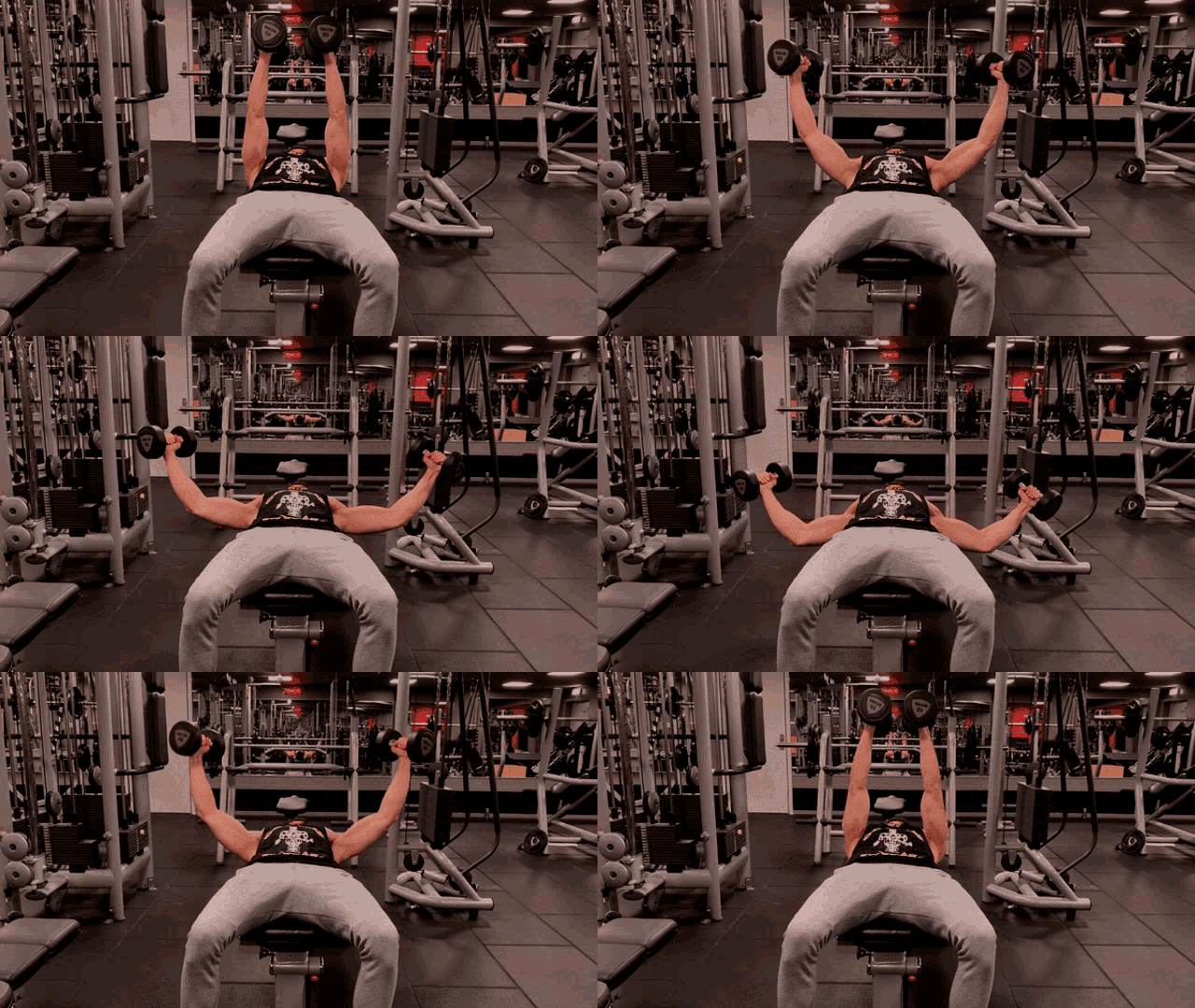
Dumbbell chest flyes isolate your chest by stretching the pecs wide and then squeezing them hard at the top, making them ideal for adding size after your main pressing work. Because the arms move in a wide arc with only a slight elbow bend, they load the muscle without needing heavy weights, which helps protect your shoulders.
Lie back on a bench or on the floor with a dumbbell in each hand, arms extended above your chest with a soft bend in your elbows. Slowly open your arms out to the sides in a wide arc until you feel a deep stretch across your chest, then squeeze your hands back together over your chest for 3 sets of 12–15 reps.
Flyes focus on the lengthened position of the pecs, which is great for hypertrophy and for “finishing” your chest after heavier compound presses. Going lighter and controlling the stretch reduces shoulder strain while still giving you a strong mind–muscle connection, whether you choose the floor or a bench setup.
Think about hugging a big tree as you bring the dumbbells back together, keeping that slight elbow bend instead of turning the move into a press. If your shoulders feel cranky, reduce the range of motion and prioritize control over load so the chest, not the joints, takes the work.
Suppose if you are not sure of your form or want more guidance, learn more about our Dumbbell Chest Fly guide here
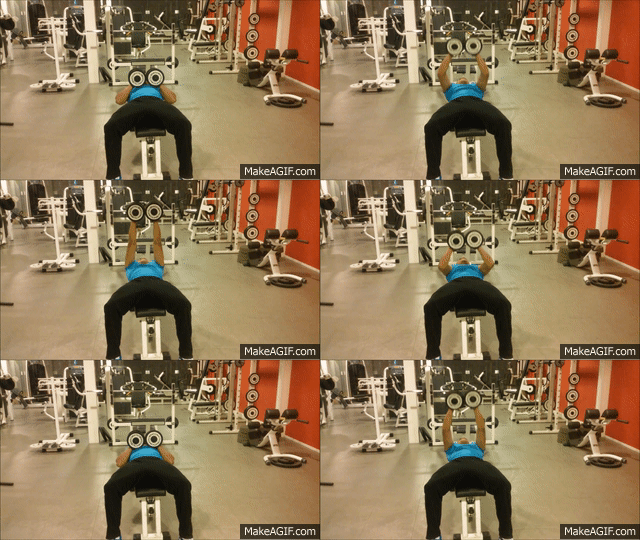
The dumbbell squeeze press is a compound chest exercise that hits your pecs, shoulders, and triceps, just like other bench press variations. What makes it different is the constant inward squeeze, you press the dumbbells together throughout the movement, which keeps tension locked in your chest the whole time, without needing extra equipment. This grip also takes some stress off your shoulders, helping you isolate the chest even more.
Focus on the squeeze, not just the weight. The real work for your chest comes from pressing the dumbbells inward the entire time. Don’t just push them up and down, prioritize that constant squeeze before you reach for heavier dumbbells.
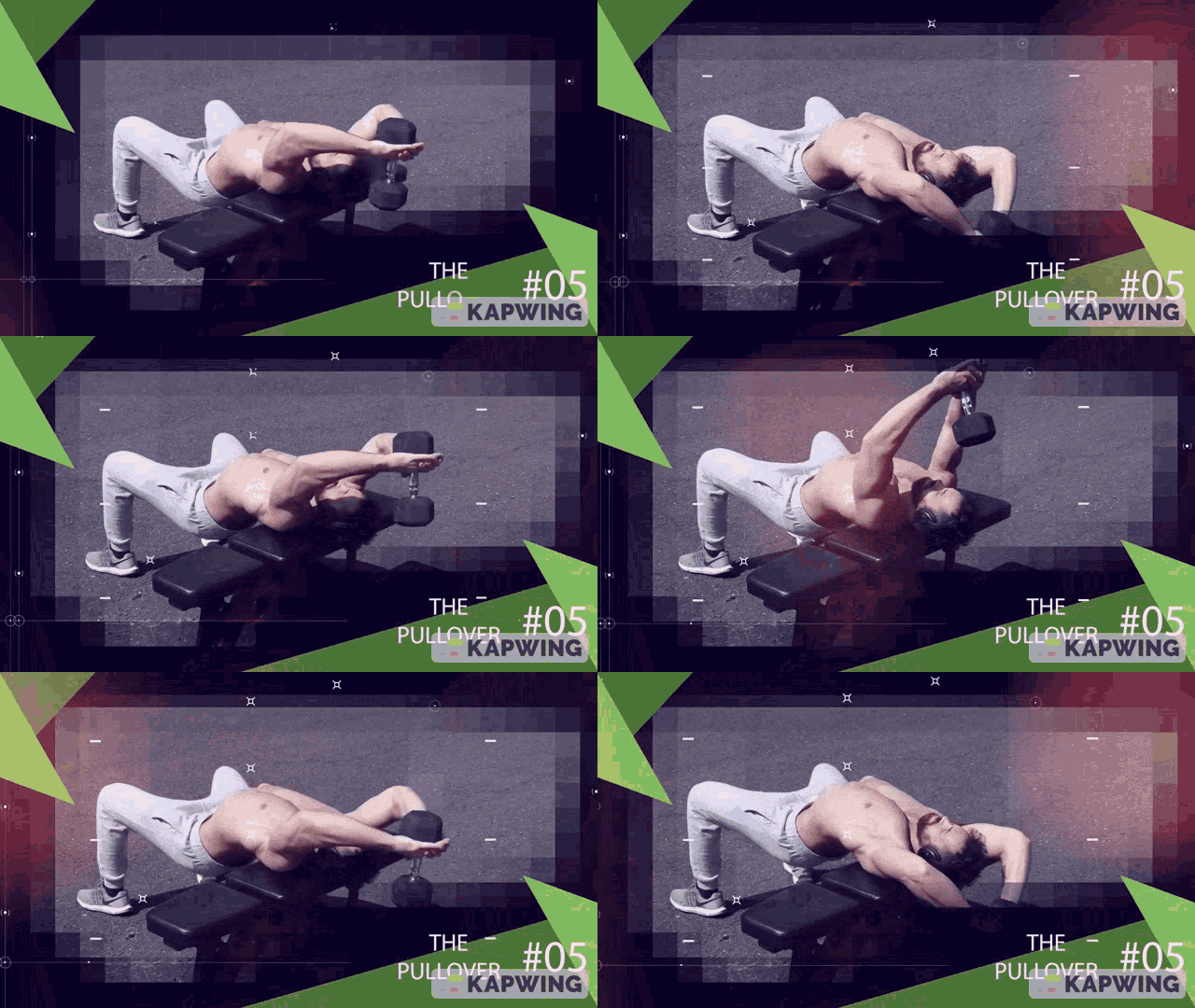
Dumbbell pullovers bridge your chest and lats in one movement, giving you a deep stretch across the upper body while training strength and control behind your head. They pair well with your main presses to round out chest days and support better breathing mechanics for long HYROX efforts.
Lie across a bench or along it with your upper back supported, holding one dumbbell with both hands above your chest. Lower the weight in a smooth arc behind your head until you feel a big stretch, then pull it back over your chest for 3 sets of 12 reps.
The long lever and overhead path load both the chest and lats through a big range of motion, which can help with that “ribcage expansion” feel and upper body endurance when breathing hard in races or conditioning pieces. Keeping the weight moderate protects your shoulders while still giving you plenty of stimulus and carryover to functional pushing and pulling.
Keep a slight bend in your elbows and your core braced so your lower back doesn’t arch excessively as the dumbbell goes behind your head. Think about exhaling as you pull the weight back over your chest to link the movement directly with your breathing rhythm.
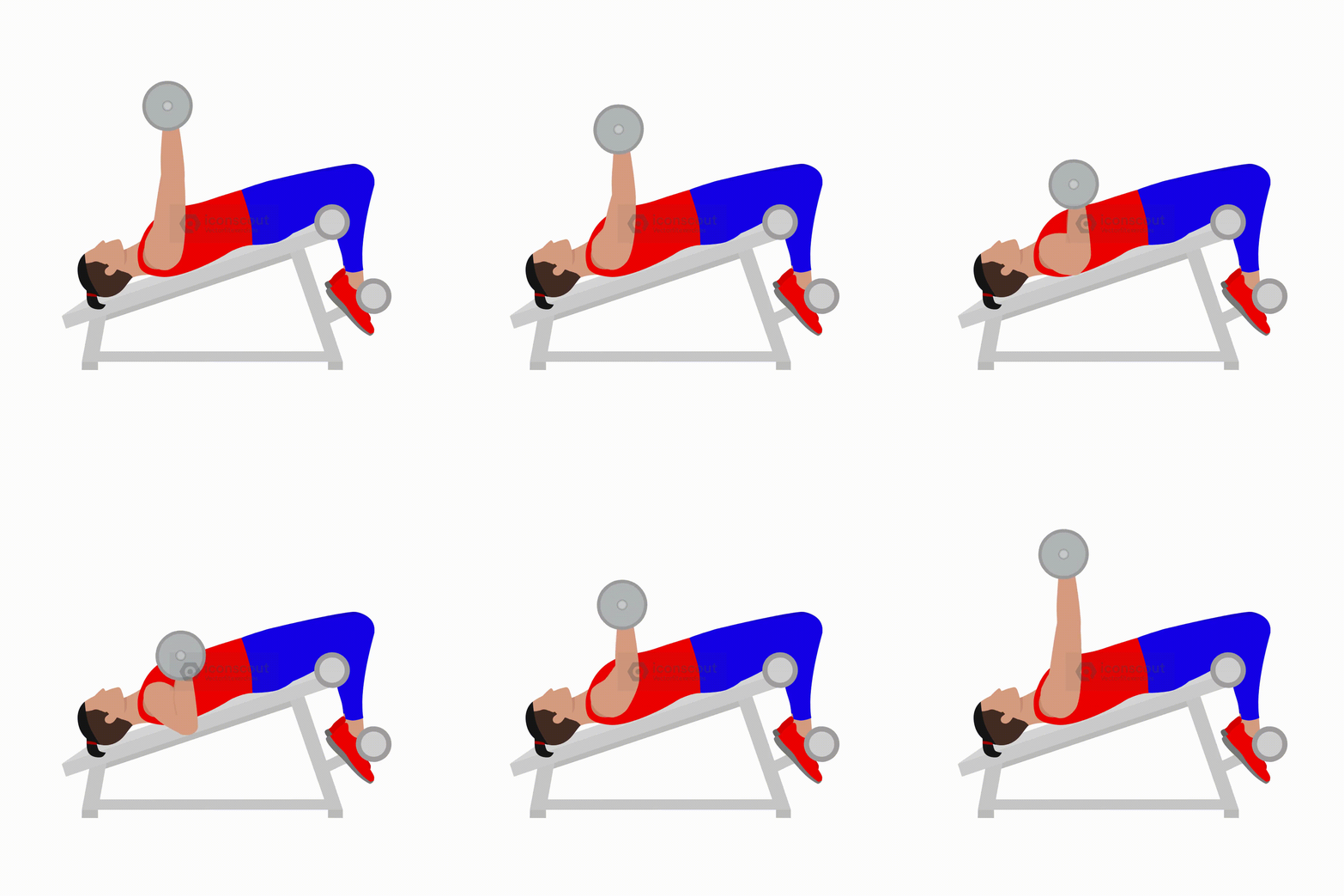
The decline dumbbell press targets the lower chest while still training your shoulders and triceps, giving your pecs a fuller, denser look from top to bottom. The decline angle also takes some stress off the shoulders and can feel more joint-friendly than flat pressing for many lifters.
Use a decline bench or elevate your feet on a platform while lying back with a dumbbell in each hand at lower chest level. Press the dumbbells up in a smooth path over your chest and lower them under control for 3 sets of 8–10 reps.
Pressing from a lower chest angle shifts more emphasis to the lower pec fibers, helping you build a balanced chest rather than only hitting the mid and upper portions. If you don’t have a decline bench, bridging your hips on the floor creates a similar angle so you still get that lower‑chest focus with minimal equipment.
Keep your wrists stacked over your elbows and avoid letting the weights drift toward your face to stay locked into the chest. Brace your core and keep your neck relaxed so you are not straining to hold the decline position as the set gets harder.
If you want to check out the exercises that ChAIron has to offer, you can visit our exercise library
Combine these into sessions based on your level. Train chest 2-3 times a week with rest days.
This is where most people plateau. They either add weight too fast and sacrifice form, or stay comfortable and never get stronger. Here's how to actually progress.
The rule is simple: increase dumbbells by 5-10% when you can hit your target rep range with clean form. So if you're doing 3x10 dumbbell presses with 25kg and all 30 reps feel controlled, move to 27-28kg next session.
But here's what ruins this: people either jump too much (lose form, get injured) or track nothing (repeat the same weight for months). Use a simple note on your phone or app to log the weight, reps, and how it felt. "25kg x10, controlled" vs "25kg x10, struggled on last 2." That difference tells you when to jump.
For HYROX prep, this matters even more. Sled push strength directly transfers to race day, so progressive overload on chest and shoulder work isn't optional.
Here's the hard truth: a loose rep doesn't count. If your elbows flare on a dumbbell press, your chest isn't working, your front delts and shoulders are. If your lower back rounds on a floor press, you're reinforcing bad patterns that catch up later.
Record yourself during pressing movements. Most people think they have good form until they watch it back. Look for: are your elbows at 45 degrees, is your chest up, do the dumbbells track straight? Small fixes here compound into bigger strength gains.
Better yet, use tools like ChAIron that analyze your movement in real-time and give instant cues. During HYROX-style training where fatigue destroys technique, having live feedback prevents you from turning sloppy reps into habit. You'll keep good form even when your legs are tired from running.
Every 4-6 weeks, drop weight by 20% for one week. This sounds counterintuitive, but it's when your body adapts and rebuilds. Your tendons, joints, and nervous system recover. You get stronger during rest, not during the session.
Also: sleep and protein are non-negotiable.
If you're not getting 7+ hours and eating 0.8-1g protein per pound of body weight, you're leaving gains on the table. Your muscles don't grow in the gym, they grow during recovery.
Numbers aren't everything. How did the reps feel? Smooth or grinding? Did the last rep feel explosive or did you have to grind it out? This subjective data tells you more than weight alone.
Log tempo too. A slow 2-second lower and 1-second pause builds more muscle than fast, bouncy reps. If your tempo is getting faster, you're either using momentum (bad) or getting stronger (good). Track it.
Also log fatigue level: 1-10 scale. If you're always at 9-10, you're overtraining. If you're always at 4-5, you're not pushing hard enough. Sweet spot is 6-7 most days, 8-9 on key lifts.
ChAIron does this automatically: it logs how your reps felt, tracks tempo consistency, and flags when you're trending toward fatigue or recovery. Adjusting the next session based on this data keeps you progressing without plateauing or burning out.
Tools like ChAIron watch your form during chest workouts and give cues on the spot. It adjusts routines for HYROX prep or general fitness, ensuring presses build power without bad habits. No more guessing if your reps count.
In 2026, dumbbells remain a simple way to grow your chest. Pick a routine, track progress, and stay consistent. You'll build the strength and size that pays off in workouts or races.
1. Can You Build a Strong Chest with Just Dumbbells?
Yes, dumbbells provide enough resistance and variety for growth. They allow unilateral work to fix imbalances, leading to better overall strength. Focus on progressive overload, and you'll see results in 8-12 weeks without machines.
2. What Is the Best Dumbbell Workout for Chest?
The best combines compounds like presses with isolation like flyes, 3-4 times weekly. A sample: Incline Press, Flat Bench Press, Flyes. Adjust for your level to target strength and size effectively.
3. How to Do Chest Exercises with Dumbbells?
Start with feet planted, core tight. Lower weights slowly under control, exhale on the press or squeeze. Keep elbows at 45 degrees to protect joints, and focus on chest squeeze at the top.
4. What Dumbbell Exercises Target the Chest?
Key ones include dumbbell bench press for overall mass, incline press for upper chest, flyes for stretch and isolation, and pullovers for expansion. These hit all areas when combined.
5. How Many Reps for Dumbbell Chest Workout?
For strength, 6-8 reps with heavier weights. For size, 10-15 reps with moderate loads. Do 3-4 sets per exercise, resting 60-90 seconds between.
.png)
.png)