The Complete CrossFit Nutrition Guide: Fuel Performance, Build Muscle, and Optimize Recovery
CrossFit training demands more than just showing up to the box. What you eat determines whether you build strength, recover properly, and perform at your peak. This is the only CrossFit diet guide you need, backed by sports nutrition science and proven in the box.
Train Harder Without Guessing Your Form
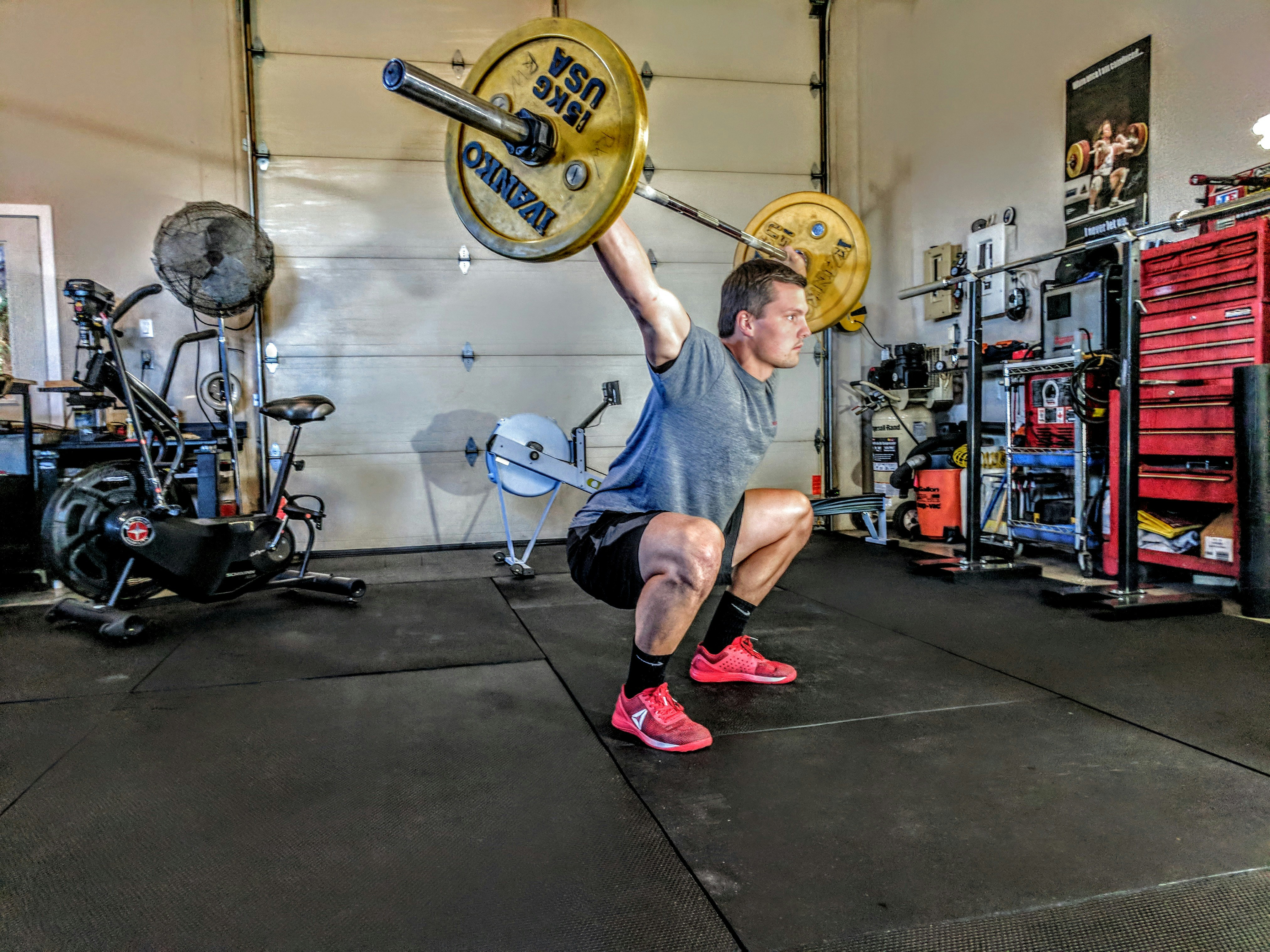
ChAIron uses real-time AI coaching to correct your movement as you train, so your squats, pulls, and Olympic lifts stay clean even when fatigue sets in. Build strength, protect your joints, and make every rep actually count.
You can have the perfect CrossFit workout programming, flawless technique on Olympic lifts, and incredible work capacity. But if your nutrition is wrong, you'll plateau, struggle with recovery, and never reach your potential.
CrossFit demands more from your body than almost any other training methodology. You're combining heavy strength work, high-skill gymnastics, and brutal metabolic conditioning, often in the same session. That requires intelligent fueling.
Most CrossFit athletes fall into one of two traps. Either they eat too little (chasing fat loss while destroying performance and recovery), or they eat randomly without structure (assuming hard training means they can eat whatever).
Both approaches fail.
This guide breaks down exactly what CrossFit nutrition should look like, macros, meal timing, food quality, the Zone Diet approach, and how to adjust nutrition based on your goals (performance, body composition, or both).
Whether you're training for the CrossFit Open, chasing a podium finish at local competitions, or just want to perform better in daily WODs, proper nutrition is non-negotiable.
CrossFit training creates specific physiological demands that require targeted nutritional support.
High Glycogen Depletion from Mixed Modal Training
CrossFit workouts combine strength, skill, and conditioning in ways that deplete muscle glycogen rapidly. A typical training day might include:
Heavy back squats (strength work requiring ATP-PC system)
Kipping pull-ups and muscle-ups (skill work requiring neuromuscular coordination)
A 15-minute metcon combining thrusters, box jumps, and rowing (glycolytic and aerobic systems)
This mixed modal approach burns through stored carbohydrates faster than pure strength training or pure endurance work. Without adequate carbs, performance crashes mid-WOD and recovery suffers.
Muscle Damage from High-Volume Eccentric Loading
Olympic lifts, gymnastics movements, and high-rep barbell work create significant muscle damage. Kipping pull-ups, pistol squats, and heavy cleans all involve eccentric contractions (muscle lengthening under load) that tear muscle fibers.
Repairing this damage requires adequate protein intake, specifically amino acids that support muscle protein synthesis.
Inflammation from Training Intensity and Volume
The intensity and volume typical of CrossFit training trigger inflammatory responses. While some inflammation is necessary for adaptation, excessive inflammation from inadequate nutrition slows recovery and increases injury risk.
Healthy fats (particularly omega-3 fatty acids from fatty fish), antioxidants from vegetables and fruits, and anti-inflammatory foods help manage this response.
Energy System Demands Across Time Domains
CrossFit trains energy systems across all time domains:
Glycolytic system (2-10 minute high-intensity efforts)
Oxidative system (longer chippers, endurance work)
Supporting all three systems requires balanced macronutrient intake. Carbohydrates fuel glycolytic work. Protein supports recovery and adaptation. Healthy fats provide sustained energy and support hormonal function.
The Zone Diet: CrossFit's Original Nutrition Framework
The Zone Diet has been CrossFit's recommended nutritional approach since the early days.
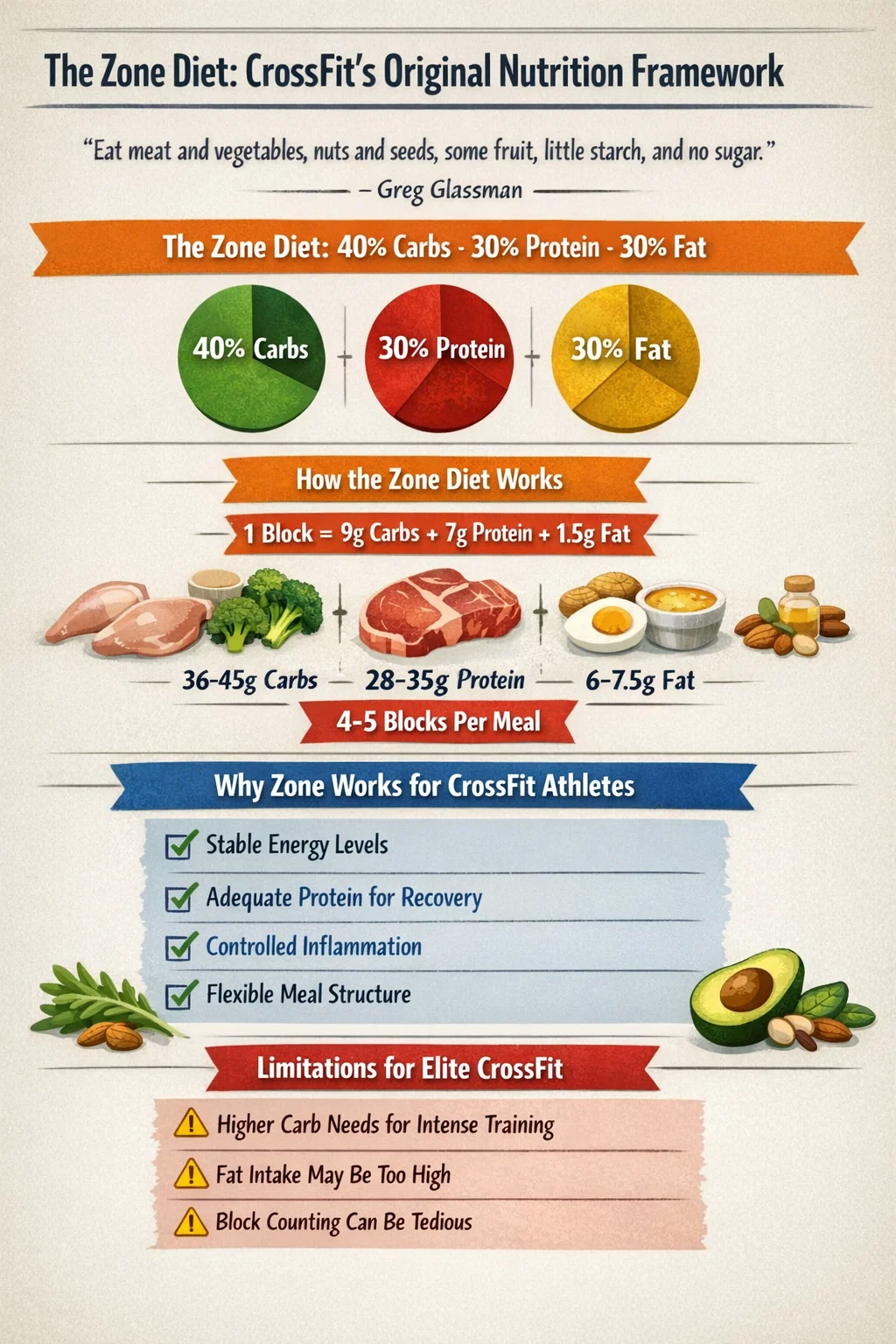
CrossFit founder Greg Glassman famously stated: "Eat meat and vegetables, nuts and seeds, some fruit, little starch, and no sugar."
That simple guideline evolved into endorsing the Zone Diet as the foundation for CrossFit nutrition.
What the Zone Diet Actually Is
The Zone Diet, developed by Dr. Barry Sears, structures meals around specific macronutrient ratios:
40% carbohydrates
30% protein
30% fat
Each meal is built using "blocks" that represent fixed amounts of each macro. The goal is stabilizing blood sugar levels, controlling insulin response, and reducing inflammation through balanced meals.
7g protein (from lean meats, fish, eggs, protein powder)
1.5g fat (from nuts, avocado, olive oil)
A typical CrossFit athlete might eat 4-5 blocks per meal (depending on body weight and activity level), creating meals with approximately:
36-45g carbs
28-35g protein
6-7.5g fat
Why Zone Works for CrossFit Athletes
The Zone Diet provides:
Stable energy levels: The 40/30/30 ratio prevents blood sugar spikes and crashes that kill performance mid-WOD.
Adequate protein for recovery: 30% protein ensures CrossFit athletes get enough amino acids for muscle repair without excessive caloric intake.
Controlled inflammation: Emphasis on quality foods (lean protein, vegetables, healthy fats) reduces systemic inflammation from training.
Flexibility within structure: The block system allows meal variety while maintaining consistent macros.
Zone Diet Limitations for High-Performance CrossFit
While Zone works well for general fitness and fat loss, competitive CrossFit athletes often need modifications:
Carbohydrate intake may be insufficient: 40% carbs can under-fuel athletes training twice daily or competing at high levels. Many elite CrossFit athletes increase carbohydrate intake to 45-50% during heavy training blocks.
Fat intake may be too high: 30% fat works for moderate activity but can displace needed carbs for athletes with very high training volumes.
Block systems can be restrictive: Constantly calculating blocks becomes tedious. Many athletes use Zone as a framework but simplify implementation.
Macronutrient Breakdown for CrossFit Performance
Beyond Zone, understanding how each macronutrient supports CrossFit training helps you adjust nutrition to your goals.
Carbohydrates: The Primary Fuel Source
Carbs are not the enemy of CrossFit athletes. They're essential fuel.
Adequate protein intake prevents muscle breakdown and supports growth
How much protein CrossFit athletes need:
General guideline:
1.6-2.2g protein per kg body weight daily
Example: 150lb (68kg) athlete = 109-150g protein daily
During fat loss phases:
Increase to 2.0-2.4g per kg to preserve muscle while in caloric deficit
Higher protein reduces hunger and protects lean tissue
Best protein sources for CrossFit:
Animal sources:
Lean meats (chicken breast, turkey, lean beef)
Fatty fish (salmon, mackerel, sardines, provide protein + omega-3s)
Eggs (whole eggs provide complete amino acid profile)
Greek yogurt (high protein, probiotic benefits)
Plant sources:
Legumes (beans, lentils)
Tofu and tempeh
Protein powder (whey, casein, plant-based blends)
Distribution matters: Spread protein across 4-5 meals (20-40g per meal) rather than loading it all at dinner. This optimizes muscle protein synthesis throughout the day.
Healthy Fats: Hormones, Inflammation, and Sustained Energy
Healthy fats support hormonal function, reduce inflammation, and provide sustained energy for longer efforts.
Why CrossFit athletes need adequate fat:
Fat-soluble vitamins (vitamin D, vitamin E, vitamin K) require dietary fat for absorption
Testosterone and other anabolic hormones depend on fat intake
Omega-3 fatty acids reduce inflammation from training
Fats provide calorie-dense fuel without spiking insulin
Post workout nutrition is critical for CrossFit athletes. The 30-90 minute window post-training is when your body is most receptive to nutrients for recovery.
What to eat post-workout:
Immediate (within 30 minutes):
20-40g protein (fast-digesting)
0.5-1g carbs per kg body weight
Minimal fat (doesn't interfere with absorption but isn't priority)
Examples:
Protein shake with banana
Greek yogurt with berries and honey
Chicken breast with white rice
Chocolate milk (classic, effective)
Goals:
Replenish glycogen stores depleted during training
Provide amino acids for muscle protein synthesis
Reduce muscle breakdown
Support immune function
Full meal (1-2 hours after workout):
Balanced meal with protein, carbs, healthy fats, vegetables
Example: Salmon with sweet potato, avocado, and roasted vegetables
Sample CrossFit Nutrition Plans for Different Goals
Performance-Focused Plan (Competitive CrossFit Athlete)
Goal: Maximum performance, muscle gain, recovery
Daily macros (150lb/68kg athlete, 2800 calories):
Protein: 150g (21%)
Carbs: 400g (57%)
Fat: 69g (22%)
Sample day:
Breakfast (7:00 AM):
3 whole eggs scrambled
1 cup oats with berries
1 tbsp almond butter
Pre-Workout Snack (9:30 AM):
Banana with 1 tbsp peanut butter
Post-Workout (11:30 AM):
Protein shake (30g protein)
2 rice cakes with honey
Lunch (1:00 PM):
Grilled chicken breast (6oz)
1.5 cups white rice
Mixed vegetables
Olive oil dressing
Afternoon Snack (4:00 PM):
Greek yogurt (1 cup)
1/2 cup granola
Handful of berries
Dinner (7:00 PM):
Fatty fish (salmon, 6oz)
Large sweet potato
Steamed broccoli
Avocado (1/4)
Evening Snack (if needed):
Casein protein shake or cottage cheese
Fat Loss Plan (Maintaining Performance)
Goal: Lose fat while maintaining strength and WOD performance
Daily macros (150lb/68kg athlete, 2000 calories):
Protein: 150g (30%)
Carbs: 200g (40%)
Fat: 67g (30%)
Sample day:
Breakfast:
4 egg whites + 1 whole egg
1/2 cup oats
Berries
Pre-Workout:
Apple with 10 almonds
Post-Workout:
Protein shake (30g)
Banana
Lunch:
Turkey breast (5oz)
Large salad with vegetables
Olive oil + vinegar
1/2 cup quinoa
Afternoon Snack:
Greek yogurt (low-fat)
Handful of berries
Dinner:
Lean ground beef (5oz)
Cauliflower rice
Vegetables
Small sweet potato
Key difference: Lower total carbs and calories, higher protein percentage to preserve muscle, strategic carb timing around training.
Balanced Health and Fitness Plan (Recreational CrossFitter)
Goal: General health, moderate performance, sustainable lifestyle
Daily macros (150lb/68kg athlete, 2200 calories):
Protein: 130g (24%)
Carbs: 250g (45%)
Fat: 76g (31%)
Sample day:
Breakfast:
2 whole eggs + 2 egg whites
2 slices whole grain toast
Avocado
Fruit
Snack:
Handful of nuts
Apple
Lunch:
Chicken breast (4oz)
Brown rice (1 cup)
Mixed vegetables
Pre-Workout:
Rice cakes with almond butter
Post-Workout:
Protein shake
Banana
Dinner:
Grilled fish
Sweet potato
Large salad
Olive oil
Nutrition Tips for Optimizing CrossFit Performance
Prioritize Food Quality Over Macros Alone
Quality foods provide micronutrients, fiber, and phytonutrients that support overall health and recovery.
What quality means:
Lean proteins from whole food sources over processed meats
Complex carbohydrates from whole grains, tubers, fruits over refined sugar
Healthy fats from nuts, seeds, fish, avocado over industrial oils
Abundant vegetables for micronutrients and fiber
Processed foods can fit occasionally but shouldn't dominate your diet.
Manage Blood Sugar for Stable Energy
Unstable blood sugar levels cause energy crashes mid-WOD, poor recovery, and increased fat storage.
How to stabilize blood sugar:
Pair carbs with protein and fat at meals
Choose complex carbs over simple sugar outside training windows
Avoid excessive added sugar and refined carbohydrate
Recovery quality (sleep, soreness, readiness to train)
Energy levels throughout day and during training
Hunger and satiety
If performance is declining, body weight is dropping too fast, or recovery is suffering, increase caloric intake (primarily carbs).
If fat loss has stalled despite consistent training, reduce calories slightly (100-200 reduction, reassess after 2 weeks).
Common CrossFit Nutrition Mistakes to Avoid
Mistake 1: Under-Eating for Performance Goals
Many CrossFit athletes, especially women, chronically under-eat. They train 5-6 times per week at high intensity but consume barely enough calories to support basic metabolic function.
The result:
Plateaued strength gains
Poor recovery
Hormonal dysfunction
Increased injury risk
Metabolic adaptation (metabolism slows)
The fix: Calculate actual caloric needs based on activity level. Performance goals require adequate fuel.
Mistake 2: Demonizing Carbohydrates
Low-carb diets are popular but poorly suited to CrossFit's glycolytic demands.
What happens:
Glycogen depletion leads to reduced power output
Strength work suffers
Metcon times get slower
Recovery is impaired
Training feels harder than it should
The fix: Embrace carbs as performance fuel. Adjust amounts based on training volume but don't eliminate them.
Mistake 3: Ignoring Micronutrients and Vegetables
Macros matter, but vegetables, fruits, and micronutrient-dense foods support immune function, bone health, and recovery.
CrossFit athletes training hard with poor micronutrient status experience:
Frequent illness
Poor bone density (stress fracture risk)
Impaired recovery
Low energy levels
The fix: Eat vegetables at most meals. Include variety (colors indicate different phytonutrients). Prioritize quality foods over just hitting macro targets.
Mistake 4: Poor Post-Workout Nutrition
Skipping post workout nutrition or waiting hours to eat sabotages recovery.
The fix: Eat within 30-90 minutes after training. Protein + carbs. Non-negotiable for competitive athletes.
Mistake 5: Excessive Caloric Restriction During Fat Loss
Aggressive caloric deficits (1000+ calorie reductions) paired with high-volume CrossFit training destroy performance, muscle mass, and metabolic health.
The fix: Moderate deficits (300-500 calorie reduction). Prioritize protein. Accept slower fat loss that preserves performance.
Ready to Fuel Your CrossFit Performance Properly?
CrossFit nutrition isn't complicated, but it requires intentionality. Zone Diet principles provide a solid framework. Understanding macros, meal timing, and food quality allows you to adjust nutrition to your specific goals.
Whether you're chasing podium finishes or just want to perform better in daily WODs, what you eat determines whether your training translates into results or just beats you down.
ChAIron helps CrossFit athletes integrate intelligent nutrition with adaptive training programming. Get personalized guidance on fueling your sessions, optimizing recovery, and building the body composition that supports performance.
Skip obsessive calorie tracking. ChAIron’s pattern-based nutrition guidance helps you eat in a way that supports performance, recovery, and consistency, so your food works with your training, not against it.

.png)
.png)